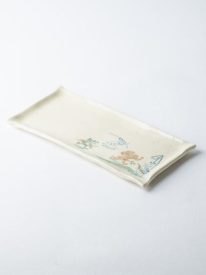
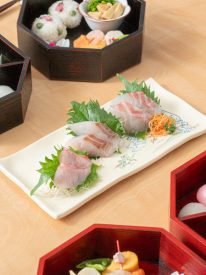
Featuring the distinctive “nami-yu” glaze, which is made from the ashes of the Kyoto forest, this rectangle plate has a natural base color in yellowish cream-white. It depicts the famous illustrated scroll named “Choju Giga” which is a caricature picture scroll depicting anthropomorphic animals and their playfulness, dating from the 12th to 13th centuries. Founded in…
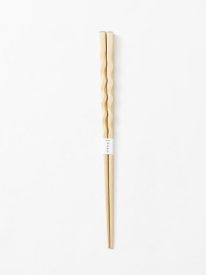
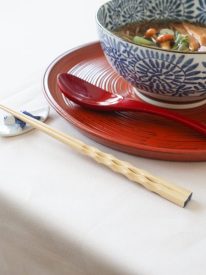
These chopsticks fit in your hand perfectly with their spiral shape. The design showcases the natural texture of bamboo, while the navy color on the top adds a subtle accent. Bamboo chopsticks are moderately light and very easy to hold. Their flexibility and thin tips make eating effortless and precise. Yamachiku, a manufacturer of bamboo…
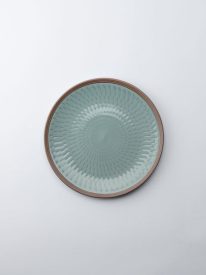
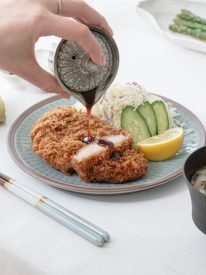
Featuring a round plate exposing the outlines of the red clay, an exquisite balance between the elegance of emerald celadon and the rustic red soil. The glazed surface is smooth with shallow grooves characteristic of “Tobikanna” (chattered pottery). A combination of a century old tradition of Kyoto Celadon pottery, and the folk craft of Kyushu Koishikawara…
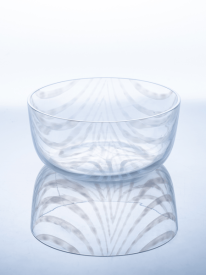
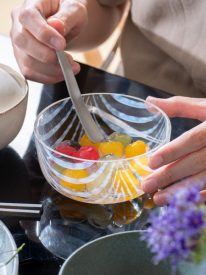
This is a glass bowl with makiage pattern from the Taisho Roman glass series by Hirota Glass, a long-established glass manufacturer in Tokyo. Makiage is a traditional tie-dyeing technique used in kimono making. This method creates intricate patterns that convey an aura of elegance and grace. This pattern is created by the aburidashi “invisible ink” technique,…
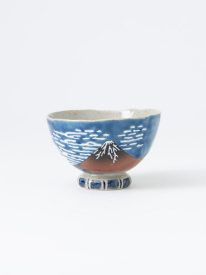
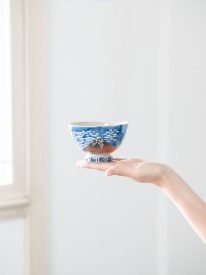
This bowl features Red Fuji, capturing the moment of the rising sun turning Mount Fuji red in a clear early morning. Each piece is handcrafted by an artisan of Kutani ware. It is painted with Japanese color paints using a brush, as you can see the painted part is slightly thickened. With the combination of…
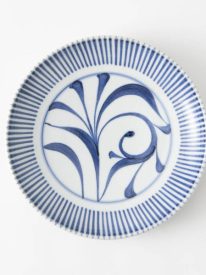
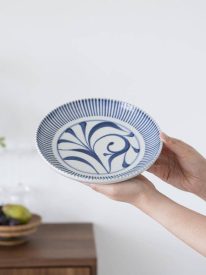
This round dinner plate features an arabesque pattern, a signature motif of Baizan Kiln, accented by a tokusa striped edge that frames the design with elegance. The hand-painted nature motifs add a warm, personal touch, showcasing the artisan’s skill. Perfectly sized for serving salads and main dishes, its traditional, refreshing blue pattern and smooth porcelain…
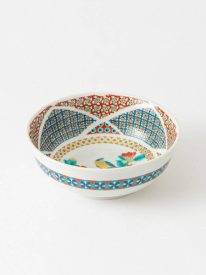
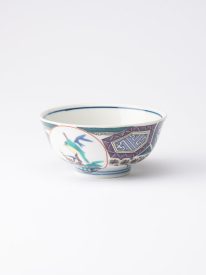
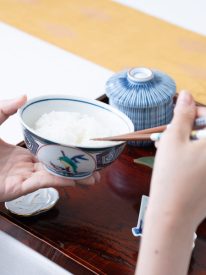
The Japanese bowl features a bird resting on a branch of camellia in bright colors. The delicate and intricate pattern drawn on the inside of the bowl gradually appears while eating, which is a pleasant surprise. A Japanese traditional pattern is also drawn on the outside, so it is a beautiful bowl from any angle….
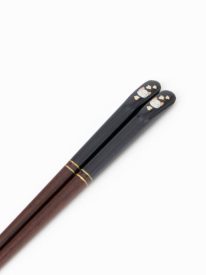
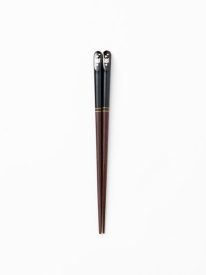
These are children’s chopsticks made of natural wood and lacquer, featuring gold maki-e, a traditional technique. The upper part of the chopsticks is cut diagonally and decorated with a cute cat and footprint pattern. They are suitable for children in the upper grades of elementary school. The tips of the chopsticks are square to make them…
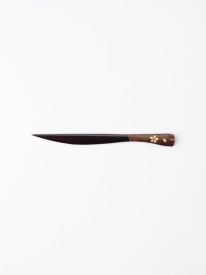
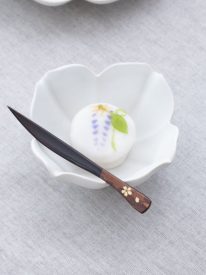
A chic lacquered Wagasi knife by Yatsuyanagi. The handle is made of wild cherry bark work and painted with a golden cherry blossom motif. Although small, the combination of different traditional techniques gives it a sophisticated appearance. The 12.5cm(4.9in) size is especially suitable as a Wagashi knife. It also makes an elegant impression when used for fruits and…
A gorgeous Japanese bowl with intricate paintings by hand. The detailed drawings in the Iidaya/Akae style of Kutani ware are truly remarkable. Not only does it have a beautifully detailed pattern on the inside, but also the patterns on the outside make it a beautiful bowl from every angle. The size is suitable for serving…
This Japanese rice bowl has a typical design of the Ko-Kutani (old Kutani) style dating back to mid-17th century, depicting the nature-themed motif and traditional patterns and distinctive bright colors of Kutani ware. It is painted with the five colors of red, yellow, green, purple and dark blue, known as “Go-Sai” in Japanese. Kutani ware uses…
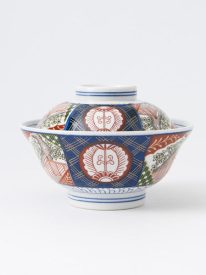
This regular-sized Japanese donburi rice bowl features sakura, or cherry blossoms, framed by dark blue, lattice-like patterns, all rendered in the traditional nishiki-e style. Nishiki-e, meaning “brocade picture,” is a multi-colored woodblock print technique that revolutionized ukiyo-e during the Edo period (1603-1868 CE), when most prints were in black and white. The lid helps keep the…

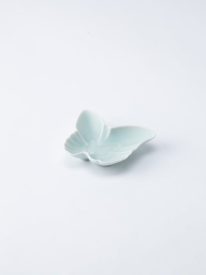 Moist Butterfly Sauce Plate