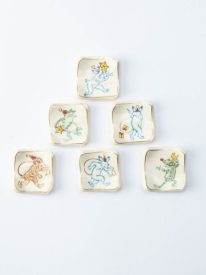
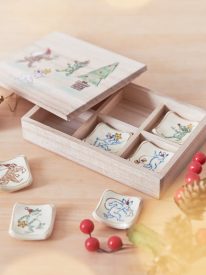
The enchanting animals from the famous Chojugiga Scroll, including frogs, monkeys, and rabbits, come alive on these chopstick rests from Tosen Kiln. Each animal is depicted with a festive Christmas touch: stars shimmering around them, hats adorning their heads, and the mischievous one even carries a bag of presents. These whimsical scenes wonderfully capture the…
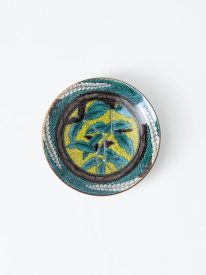
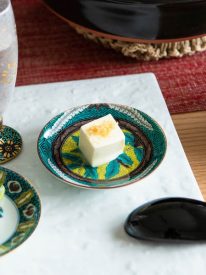
This sauce plate features wisteria in the ko-Kutani style, which is known as depicting the nature-themed daring design and distinctive bright colors of Kutani ware. Perfectly sized as a sauce plate, it is also versatile for serving small foods such as cheese, nuts, and condiments. For a more elegant and sophisticated presentation, you can place…
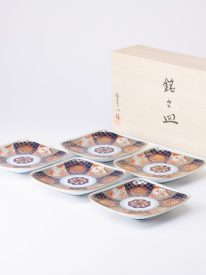
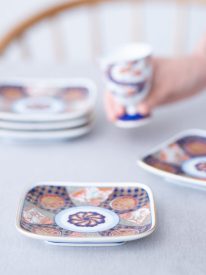
These side plates are beautifully decorated reflecting high-quality craftsmanship. The technique displayed in this plate is called somenishiki where the bowl is first glazed with white and blue patterns and then is further decorated with detailed hand painted drawings. The character in a circle on the plates is the character “kotobuki.” This character is used on…
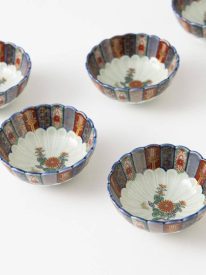
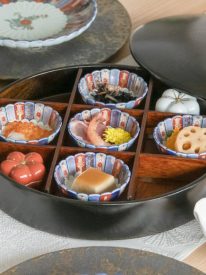
This kobachi small bowl set of 5 has a chrysanthemum shape decorated with patterns, which made by modern interpretation of old Imari. The perfect balance of vivid colors, gold and white makes it a classy and stunning piece. It is a great size as a kobachi serving side dishes such as sunomono (vinegared food), aemono (seasoned…
This sauce plate features a geometric pattern in ko-Kutani style, one of the most famous traditional styles of Kutani ware. Kutani ware uses a brush for painting with Japanese coloring paint, as you can see the painted bird is slightly thickened and standing out. Perfectly sized as a sauce plate, it is also versatile to serve…
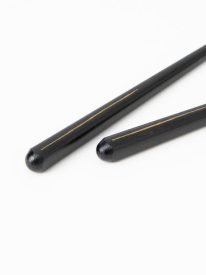
These chopsticks are made of ebony, a famous wood with a sense of luxury and dignity. The gold line in the center of the chopsticks adds a nice accent, giving them a simple yet modern impression. Ebony has become increasingly rare over the years, and its use as a material for chopsticks is decreasing. The…
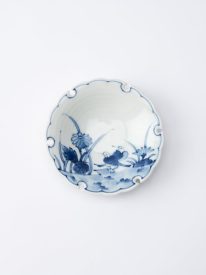
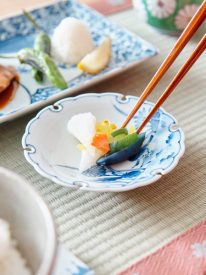
This elegant sauce plate is crafted by Takayama, renowned for Hasami porcelain. In the timeless blue and white of sometsuke, it features a classic pattern of kacho-sokaflowers, birds, and grass. The rim is delightfully formed into a snowflake, the delicate ripples and cut-outs representing the snow’s precious crystals. The gentle conical slope to the base…
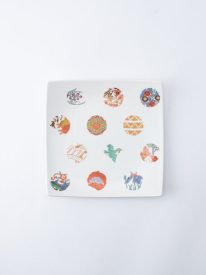
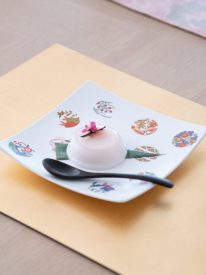
This side plate is adorned with circular motifs featuring auspicious patterns. Bright and cheerful, the circles of this surface feature both birds and floral designs that lend a festive air. The soft matte texture gives the whole piece a sophisticated feel. This item is created by the Rebirth Project, an organization that conducts various social contribution activities,…
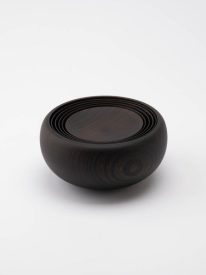
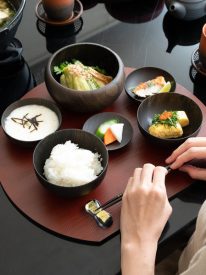
Oryoki is a functional set of bowls designed to minimize waste in daily life, based on Zen Buddhist practices. It has been gaining attention for its ease of use, functionality, and minimalist design, making it ideal for contemporary dining. Its compact design allows even a six-layer set to be stored effortlessly, making it both practical…
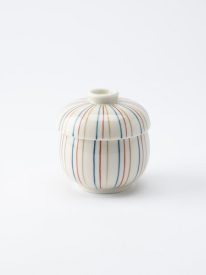
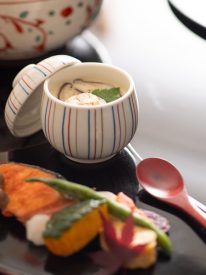
Enjoy delicious chawanmushi, Japanese steamed egg custard, in this beautiful Arita ware chawanmushi bowl. This Chawanmushi bowl is painted in the “Tokusa (Horsetail)” pattern which is a classic motif that has been beloved since the Edo period (1603 CE – 1867 CE). Its straight-growing appearance symbolizes wishes for growth and prosperity. And the three subdued colors…
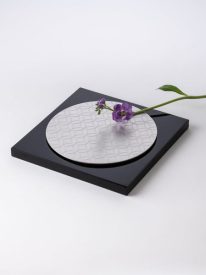
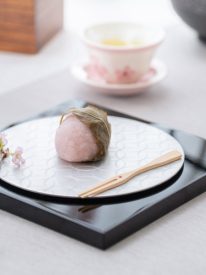
This serving tray is the result of a collaboration between a matte, subdued aluminum tray and a deep, moist Echizen lacquerware tray. Shippo is a pattern in which parallel circles of the same size are overlaid one quarter on top of the other, resulting in a continuous combination of a diamond-like shape and a petal-like shape….
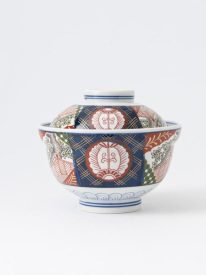
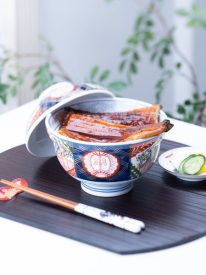
This large-sized Japanese donburi rice bowl features sakura, or cherry blossoms, framed by dark blue, lattice-like patterns, all rendered in the traditional nishiki-e style. Nishiki-e, meaning “brocade picture,” is a multi-colored woodblock print technique that revolutionized ukiyo-e during the Edo period (1603 CE-1868 CE), when most prints were in black and white. The lid helps keep…

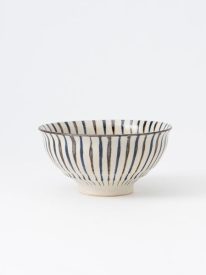 Tokusa Donburi Bowl S