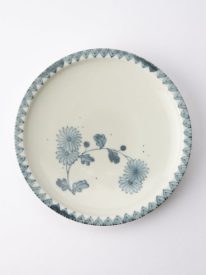
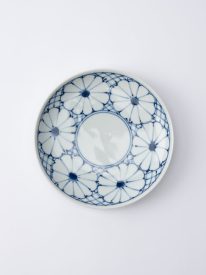
This is a Arita ware plate by Ri Sanpei (Yi Sam-pyeong) Kiln, a brand by the descendant of Yi Sam-Pyeong, the discoverer of white porcelain ore for Arita ware. This dish is simple, yet dignified and powerful. This design itself is from the early Imari period, about 400 years ago. Chrysanthemums are characterized not only by their beauty…
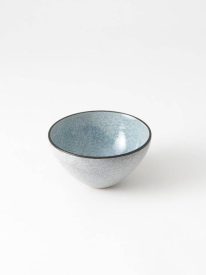
This simple, modern kobachi small bowl features a stunning bright blue color. Handcrafted by Hibino Ceramic, a brand known for creating tableware that enhances the presentation of dishes and makes them look even more appealing. In addition to its beautiful design, the bowl is durable and easy to use, making it a popular choice in…
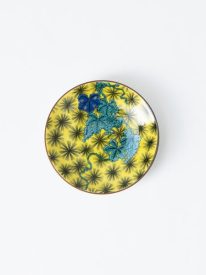
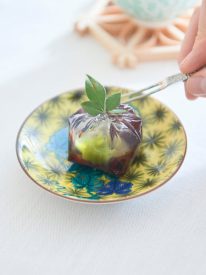
The Japanese plate features a grape and vines in Ko-Kutani (old Kutani) style, dating back to mid-17th century, depicting the nature-themed daring design and distinctive bright colors of Kutani ware. Perfect size as a sauce plate. It is also versatile to serve cheese, nuts, condiments, and other small food. Or you can put a small…
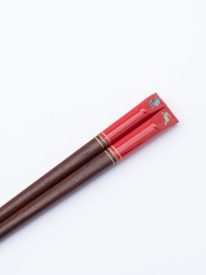
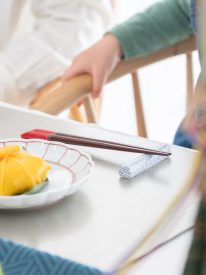
These are children’s chopsticks made of natural wood and lacquer. The top part of the chopsticks is a vibrant scarlet red color and is adorned with a gleaming rabbit motif made of natural abalone shell. Three gold rings accentuate the transition into the rich brown color of the lacquered wood. The size is suitable for children…
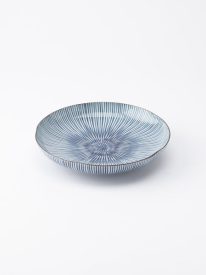
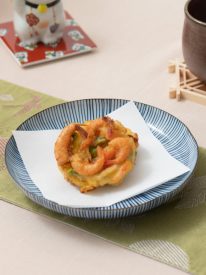
This side plate features a “Tokusa” line extending from the center and a petal-like design. The 7.1in diameter is just right for serving appetizers, side dishes and desserts. The “Tokusa” series by the Hasami ware company Fukuhou Kiln was first produced in 1976. Since then, it has become a long seller as a standard item….
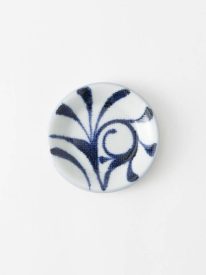
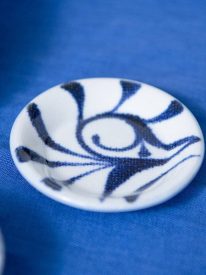
This sauce plate features a hand-painted arabesque pattern, a classic motif of Tobe ware. The deep indigo shade adds a modern touch, while the textured surface, reminiscent of woven cloth, brings warmth and a unique tactile charm to the piece. Its compact size makes it ideal for serving sauces, condiments, or small snacks. You can…
This sauce plate has the design of Katsushika Hokusai’s iconic print, “Under the Wave Off Kanagawa.” Katsushika Hokusai is one of the most renowned ukiyo-e artists of the late Edo Period (1603-1868). While Kutani Ware is loved for its vibrant colors, the hachi-kutani series features sauce plates all in white. They are made at Seikou Kiln. Seikou Kiln…
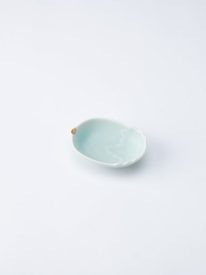
This gourd-shaped sauce plate, adorned with a touch of gold, features a design that is both delicate and captivating. The graceful matte celadon texture conveys tenderness the moment you touch it, enhanced by a moist and gentle surface finish. With its slight depth, this sauce plate is ideal for serving soy sauce or ponzu sauce,…
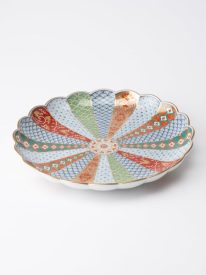
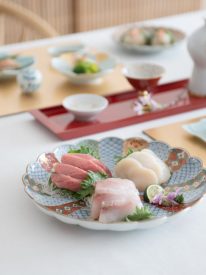
This is a gorgeous large plate with a “chrysanthemum split” design in old Imari style. The lines extend from the outside to the center and are decorated with different traditional patterns.” Each has its own meaning, such as “seigaiha,” “shigebishi,” and “zuiun.” “Seigaiha” (blue ocean waves) – a symbol of prosperity. “Shigebishi” (dense diamonds) –…
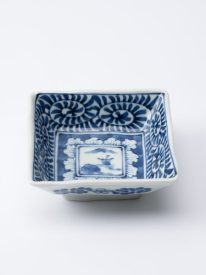
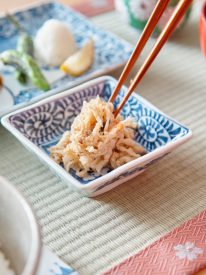
This elegant square kobachi small bowl is crafted by Takayama, a renowned maker of Hasami porcelain, and is dyed with seitan, a kind of indigo. The center of the plate features a traditional sansui landscape painting depicting the grandeur of nature, surrounded by a delicate yet bold karakusa arabesque pattern. In Japanese culture, sansui art symbolizes the…
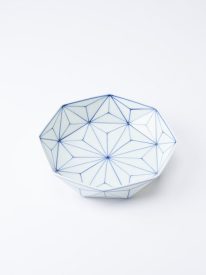
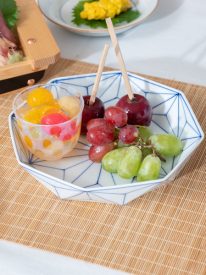
This bowl features the traditional Japanese hemp leaf pattern. The hemp leaf is considered as a symbol of good luck meant to ward off evil and is commonly used on kimono and tableware. Employing a technique of “Sometsuke” (underglaze cobalt blue) painting on a base brilliantly fired to a pure white, each piece is meticulously…
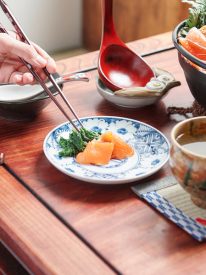
This round side plate is crafted by Takayama, a renowned maker of Hasami porcelain, and dyed with seitan, a kind of indigo. The plate is adorned with a delicate rinka petal pattern, featuring elegantly connected flower petals in a circular design. Traditionally, the rinka pattern has been cherished in Japan as a symbol of happiness…

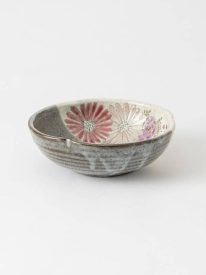 Brilliant Pink Flower Medium Bowl