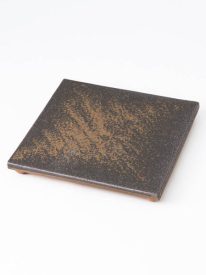
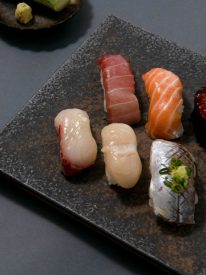
This Japanese square dinner plate features a stunning matte and rough texture, with chic tones of gray and brown that embody the beauty of wabi sabi, adding a refined touch to any dining table. Ideal for presenting appetizers, main courses, and side dishes alike, it’s also perfect for sashimi, sushi, tempura, and grilled wagyu. With…
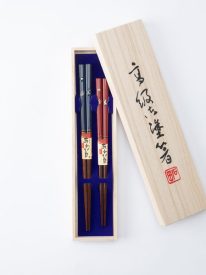
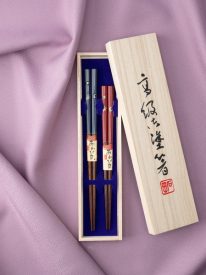
This set includes two pairs of finely crafted chopsticks, combining chic blue and red hues with subtle shell inlays. Made from natural wood and finished with layers of lacquer on the bottom half, these chopsticks have a beautiful, rich luster. Intricately designed with the traditional Japanese motif of a rabbit and a full moon, the…
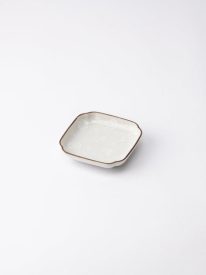
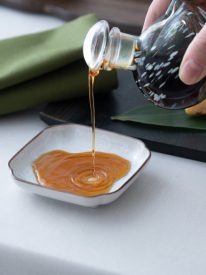
While Kutani Ware is loved for its vibrant colors, the hachi-kutani series features sauce plates all in white. They are made at Seikou Kiln. Seikou Kiln researched Japanese overglaze paint of Kutani ware for years. Thick overglaze paint with traditional Japanese paints is the same quality as hand paint and brings out a sense of…
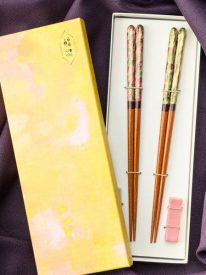
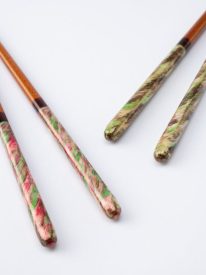
Beautifully hand-painted, these chopsticks from Matsukan’s Crystal series are a tribute to the vibrant colors of spring and summer. Inspired by komorebithe poetic Japanese term for sunlight filtering light through tree leaveseach pair is crafted with graceful brushwork and finished with a matte texture, expressing the serene dance of light and shadow within a lush forest….
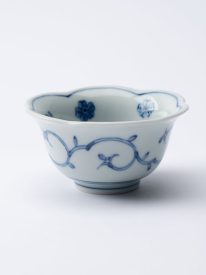
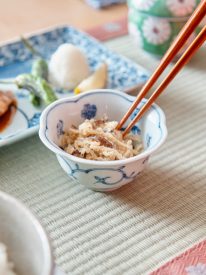
This elegant petal-rimmed kobachi small bowl is crafted by Takayama, renowned for Hasami porcelain. In the classic blue and white of sometsuke, it features an interior pattern of a blooming peony surrounded by waves and gently falling sakura. The exterior is adorned with karakusa scrollwork of budding vines. This pattern has long been cherished in…
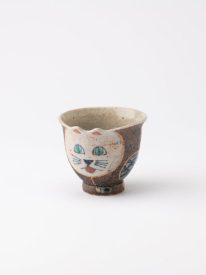
Put a smile on your face using this unique small Yunomi teacup from Kousai Kiln. This charmingly designed cup is handmade combining the Shigaraki style “Yakishime(high-fired unglazed ceramics)” and traditional “Some-nishiki,” a technique where a?product is first glazed with white and blue patterns and then is further decorated with detailed hand-painted drawings.Stoneware items are rarely…
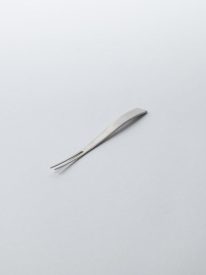
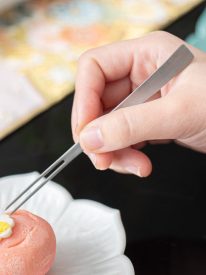
Introducing the fruit fork from the “URBAN” series, which harmonizes effortlessly with any type of dishware. It is produced in Tsubame-Sanjo, a region that accounts for 90% of metal utensil production in Japan. The entire fork is designed with a supple curve that resembles the flow of water. This curvature seems to comfortably adapt to your hand…
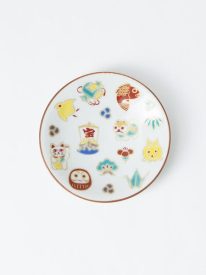
The sauce plate features happy motifs such as a lucky cat, a daruma doll, and a chidori, which are said to bring good luck in Japan. It is a great small plate for celebrating occasions, such as New Year’s Day, birthdays, and housewarming parties. Each piece is painted with Japanese color paint, which is one…
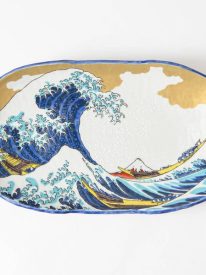
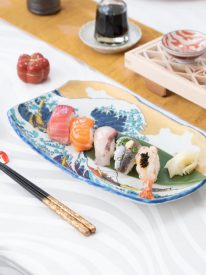
This beautiful platter features the Japanese artist Katsushika Hokusai’s ukiyo-e The Great Wave, which depicts surging waves and three boats, and silently standing Mount Fuji in the distant background. Throughout his life, Hokusai depicted waves as the main subject of his artwork along with Mount Fuji. Hokusai’s expression of the ever-changing movement of water captures…
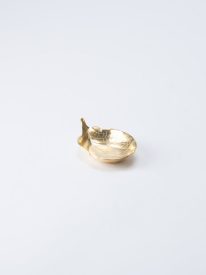
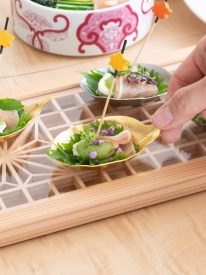
This gold amuse bouche spoon rests in the shape of a delicate persimmon leaf. It has a depth of 1.5cm(0.5in)perfect for carrying food without worries of spillage. The tapered base of the leaf is easy to hold and serves as a handle for the spoon. The veins of a persimmon leaf are recreated faithfully, a…
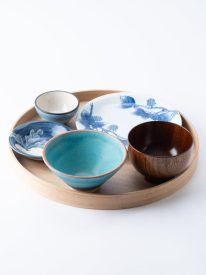
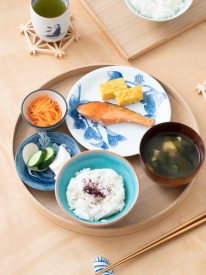
The Quiblas Mono Graceful Garden Dinnerware Set features tableware adorned with Shogoin radish, a summer vegetable from Kyoto, and raspberry branches. The combination of turquoise, a gradient of light blue, and deep brown evokes the feeling of being in a summer garden, creating a sense of nostalgia. The side plate decorated with the Shogoin radish…
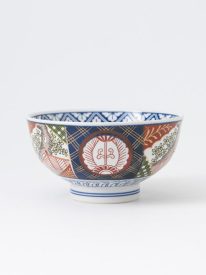
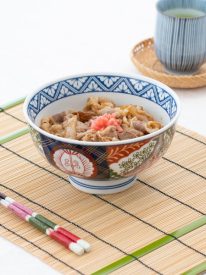
This regular-sized Japanese donburi rice bowl features sakura, or cherry blossoms, framed by dark blue, lattice-like patterns, all rendered in the traditional nishiki-e style. Nishiki-e, meaning “brocade picture,” is a multi-colored woodblock print technique that revolutionized ukiyo-e during the Edo period (1603-1868 CE), when most prints were in black and white. The bowl is perfect…

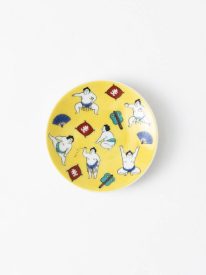 Sumo Sauce Plate
 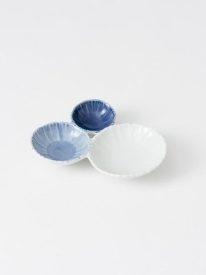 Three Chrysanthemums Sauce Plate
 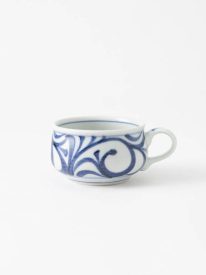 Arabesque Soup Bowl S