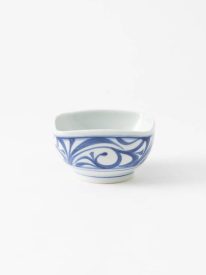
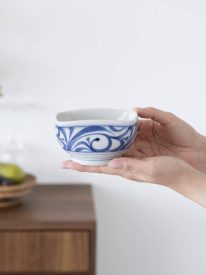
This small square kobachi bowl features a hand-painted arabesque pattern, one of the representative motifs of Tobe ware. The indigo shade adds a modern touch, while the natural motifs convey the warmth of hand-painted craftsmanship. It is ideal for serving various side dishes, such as tangy sunomono and slowly simmered nimono. The shape stands out…
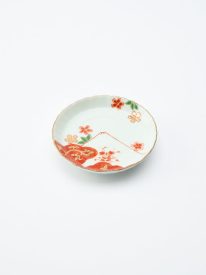
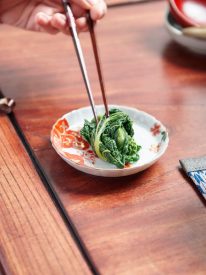
This sauce plate features refined sakura motifs alongside an iconic depiction of Mount Fuji which are iconic symbol of Japan, infusing your dining table with a distinctive touch of Japanese elegance. This plate features an 8 cm (3.1 in) flat center framed by a sharply contoured 1 cm (0.4 in) rim. The plate’s size is…
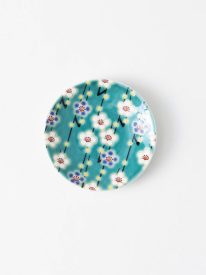
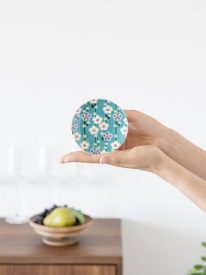
This is a Japanese small plate with a plum blossom pattern on a beautiful blue-green background. Plum blossoms have been a favorite flower in Japan for a long time, and are a motif often used in kimonos and tableware. The plum blossoms are considered to be auspicious, as they are the first to bloom…
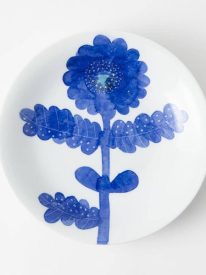
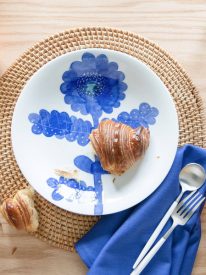
This beautiful round plate features blue flowers as if painted with watercolors. The bright design resembles blooming flowers, bringing a joyful atmosphere to the table. It is painted by the female artist, Alyne Ohigashi, who was born in the Philippines. She uses a unique technique called washi-zome (Japanese paper dyeing) and continues her ideal stoneware-making in…
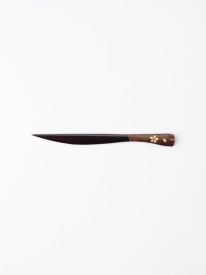
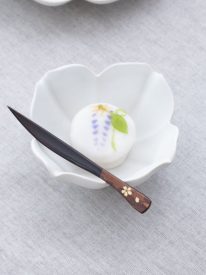
A chic lacquered Wagasi knife by Yatsuyanagi. The handle is made of wild cherry bark work and painted with a golden cherry blossom motif. Although small, the combination of different traditional techniques gives it a sophisticated appearance. The 12.5cm(4.9in) size is especially suitable as a Wagashi knife. It also makes an elegant impression when used for fruits and…
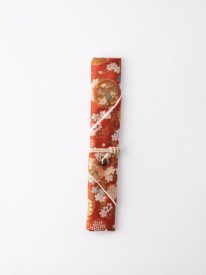
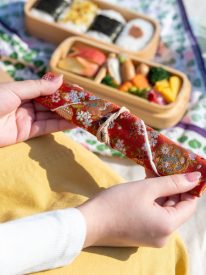
This gorgeous chopstick case is decorated with a spring flower pattern. The ideal chopstick length is 23.5 cm (9.3 in), but the case provides enough space to securely wrap chopsticks up to 24 cm (9.4 in) in length, including the tips. A cap for the chopstick tip is included for hygienic use. The chopstick case…
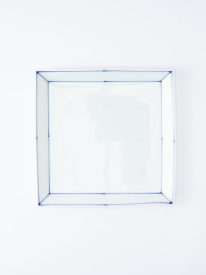
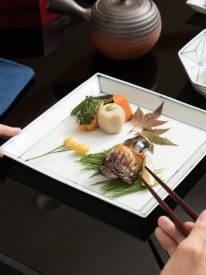
This square plate is perfectly suited for serving main dishes. The lines drawn along the rim accentuate the dish elegantly. Employing a technique of “Sometsuke” (underglaze cobalt blue) painting on a base brilliantly fired to a pure white, each piece is meticulously crafted, embodying the essence of Seto Sometsuke ware. Since the painting is done…
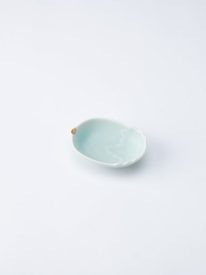
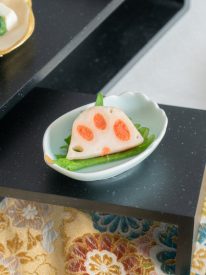
This gourd-shaped sauce plate, adorned with a touch of gold, features a design that is both delicate and captivating. The graceful matte celadon texture conveys tenderness the moment you touch it, enhanced by a moist and gentle surface finish. With its slight depth, this sauce plate is ideal for serving soy sauce or ponzu sauce,…
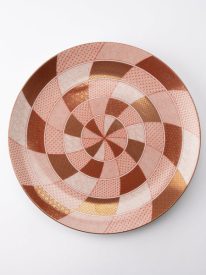
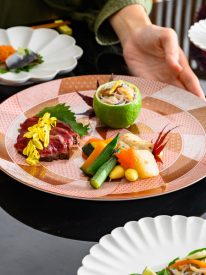
A simply stunning plate with finely detailed traditional patterns in various shades of red decorated with gold. Akae, or “red painting,” is one of the classic techniques of Kutani Ware. Detailed patterns with differing shades of a red pigment are added to the Kutani ware that fully cover the surface of the item. To add…
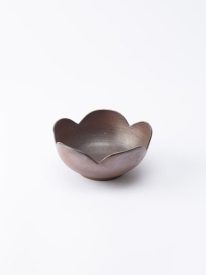
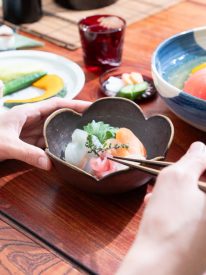
The Hozan Kiln’s Flower-Shaped Kobachi Bowl embodies the earthy textures and colors characteristic of Bizen ware. Its coarse texture, exquisite hues, and intricate patterns, shaped by the kiln’s flames, exemplify Bizen warethe art of clay and fire. Without any artificial decorations, the bowl stands out with its bold presence. The petal-shaped rim displays natural hues…
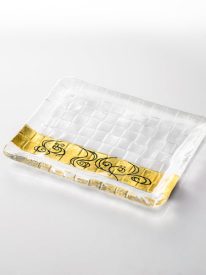
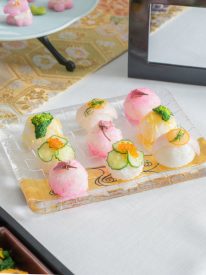
Meticulously handcrafted by adept artisans, the Yoshita Kasho Maki-e glass rectangular plate is a paragon of exquisite craftsmanship, effortlessly uniting the peerless quality of glass with a pioneering technique. This involves the integration of hand-painted Maki-e, employing natural lacquer, harmoniously combined with the esteemed Kanazawa gold leaf, presenting a piece where finesse and tradition resonate in…
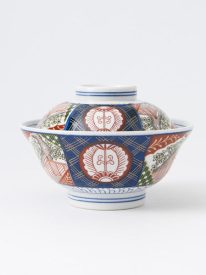
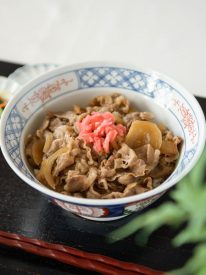
This regular-sized Japanese donburi rice bowl features sakura, or cherry blossoms, framed by dark blue, lattice-like patterns, all rendered in the traditional nishiki-e style. Nishiki-e, meaning “brocade picture,” is a multi-colored woodblock print technique that revolutionized ukiyo-e during the Edo period (1603-1868 CE), when most prints were in black and white. The lid helps keep the…

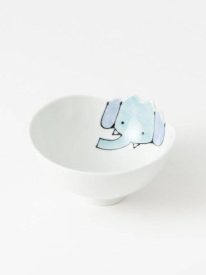 Elephant Wave Japanese Rice Bowl S
 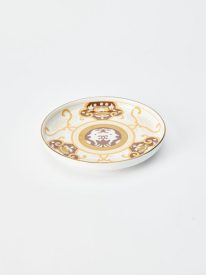 Japan Autumn Gold Old Imari Side Plate
 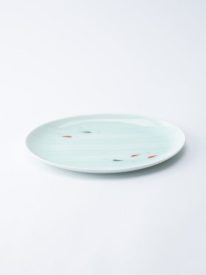 Medaka Rice Fish Oval Dinner Plate
 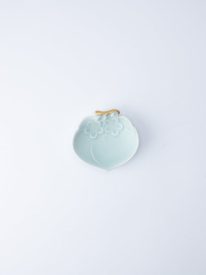 Moist Gold Peach Sauce Plate