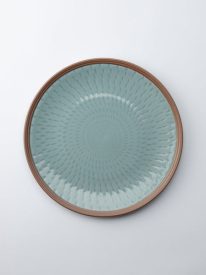
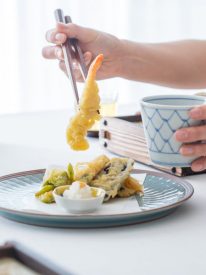
Featuring a round plate exposing the outlines of the red clay, an exquisite balance between the elegance of emerald celadon and the rustic red soil. The glazed surface is smooth with shallow grooves characteristic of “Tobikanna” (chattered pottery). A combination of a century old tradition of Kyoto Celadon pottery, and the folk craft of Kyushu Koishikawara ware,…
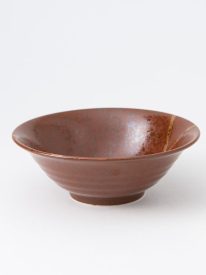
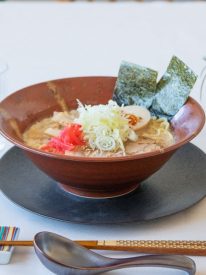
The popular children’s game of ayatori “cat’s cradle” serves as a unique design inspiration for this regular-sized ramen bowl. The bowl’s deep red-brown surface is elegantly adorned with bold, intersecting lines in light brown, reminiscent of the game’s threads. Shaped using a potter’s wheel, this piece has a pleasant weight and warmth to the touch that…
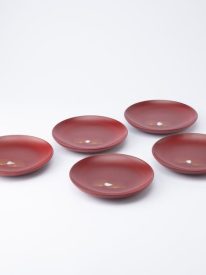
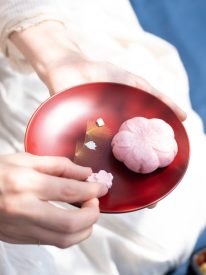
These Echizen Lacquerware side plates are exquisite items combining the refined matte shine of red lacquer with the detailed gold designs made with “Chinkin” done by the second generation Ritsuzan Tomita, a renowned Chinkin craftsman. The smooth and even coat of the deep red lacquer is painted using a technique called “Negoro,”a method of…
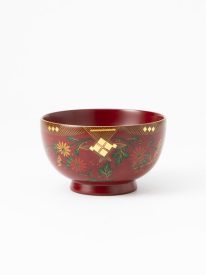
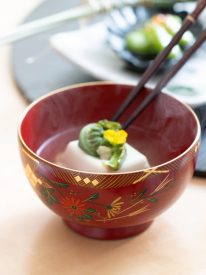
This soup bowl is hollowed out from Japanese horse chestnut, which is the best material for wood bowls. It has a slightly matte texture in calm vermilion color.The lacquering process, from the base coat to the top coat, has been inspected for designation as a traditional Aizu lacquerware craft.Aizu-e, the traditional design of Aizu lacquerware, is…
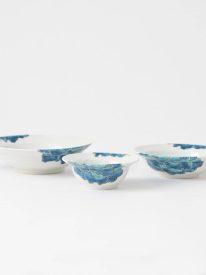
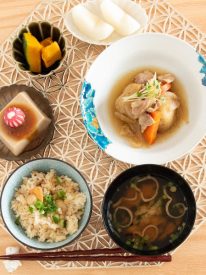
This gorgeous Japanese bowl set adorned with a bright blue peony is made by Mr. Tsuyoshi Sato, a Kutani ware artisan known for his use of bright colors and florals. With brush painting, which is a characteristic of Kutani ware, a thick peony motif is drawn as if it bloomed on the rim and outer…
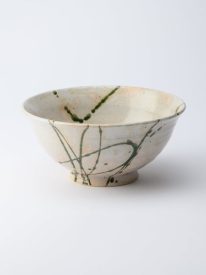
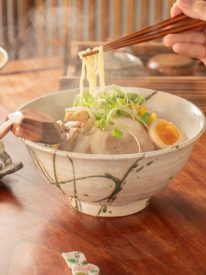
This donburi fascinates with its elegant water plant motif, highlighted with brown splashes. The green glaze and abstract brushstrokes are characteristic of Yashichida Oribe ware. Tsujii Musashi, inspired by nature, infuses his creations with a subtle, rustic charm. The bowl’s refined beauty is further enhanced by gohondedelicate pinkish spots that appear naturally after the firing…
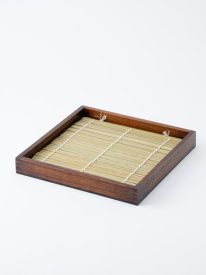
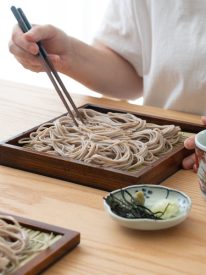
This square tray with a removable bamboo strainer is used for serving cold soba noodles. It comes with a stand to be placed under the bamboo strainer. Made by Yamanaka lacquerware and coated with brown lacquer, it can recreate the ambiance of an authentic soba restaurant. The matte texture of the “Suri-Urushi” (wiped lacquer) finish enhances…
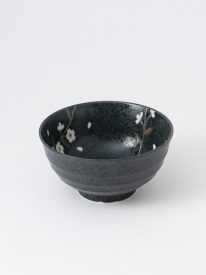
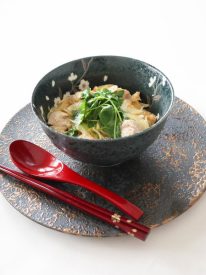
This regular-sized donburi bowl with white sakura on a black background resembles cherry blossoms at night, and conveys a traditional and elegant feel. Cherry blossoms not only symbolize beauty in Japan but also embody deep cultural significance. It is shaped with a potter’s wheel and has the warmth of a handmade product adding a touch…
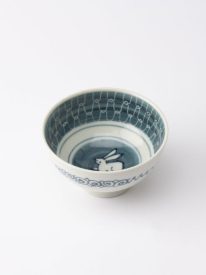
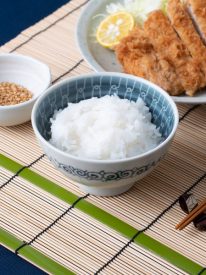
This is a Japanese rice bowl by Ri Sanpei (Yi Sam-pyeong) Kiln, a brand by the descendant of Yi Sam-Pyeong. Molded on the potter’s wheel, with handwritten rabbits and reticulated patterns, have an indescribably lovely atmosphere that soothes the hearts of those who see them. The rabbit in the center is drawn in a round…
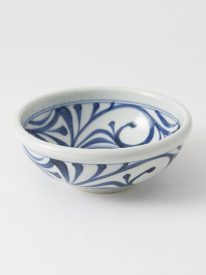
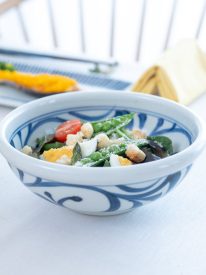
This medium bowl features a hand-painted arabesque pattern, a signature motif of Tobe ware. The deep indigo hue adds a modern touch to its traditional design. Sized for versatility, it’s perfect for daily use, whether serving salads, simmered dishes like nikujaga, or cold udon and soba noodles. The wide shape comfortably holds each dish, enhancing…
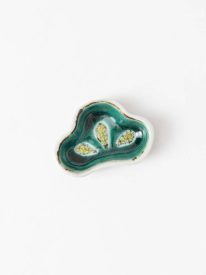
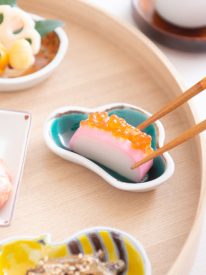
This pine-shaped Japanese plate is perfect for celebrating special occasions as well as everyday use. The pine tree is an evergreen tree and is a symbol of “eternal life.” In addition, some pine trees are thousands of years old and are said to be auspicious because they are associated with immortality and longevity. Perfectly sized…
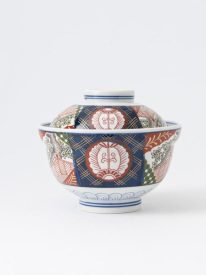
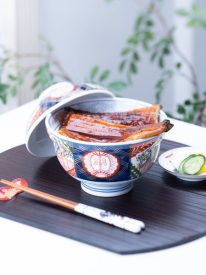
This large-sized Japanese donburi rice bowl features sakura, or cherry blossoms, framed by dark blue, lattice-like patterns, all rendered in the traditional nishiki-e style. Nishiki-e, meaning “brocade picture,” is a multi-colored woodblock print technique that revolutionized ukiyo-e during the Edo period (1603 CE-1868 CE), when most prints were in black and white. The lid helps keep…

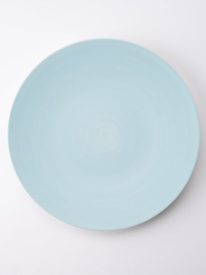 Japan Blue Pearl Blue Dinner Plate
 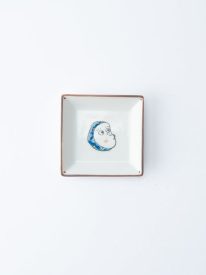 Hyottoko Square Sauce Plate