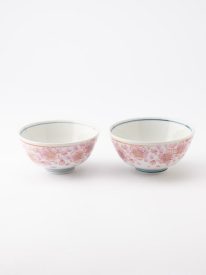
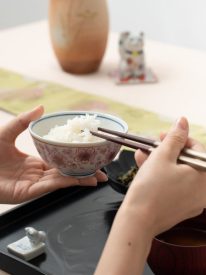
A pair of rice bowls decorated with brush painted cherry blossoms and falling petals. The pale pink color shines against the white porcelain base, beautifully depicting the petals dancing in the wind.In Japan, there is a culture of giving rice bowls as a gift to married couples to celebrate their marriage. It’s also perfect for…
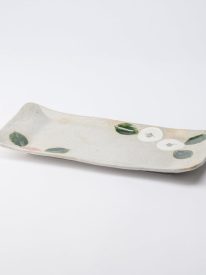
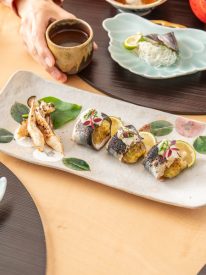
This long plate exudes a rustic elegance with its soft grayish color, featuring delicate stylized camellia flowers in white and red, accented by dark green leaves. Its irregular edges add a subtle, hand-made quality to its rectangular form.The camellia or tsubaki is beloved for its undeniable beauty as it blooms during the cold winter months. Having…
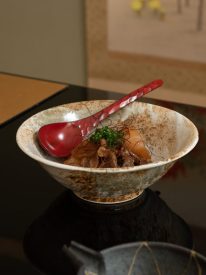
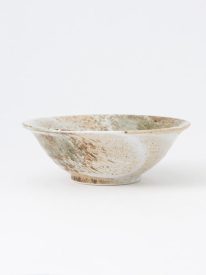
The beautiful white hue of this small ramen bowl is a hallmark of Shino ware. The speckled glaze creates a design that feels both liberating and sophisticated. Shino ware is a type of Mino ware, originally fired in Mino, Gifu Prefecture, during the Azuchi-Momoyama period (1573-1603 CE). While most of the bowl is glazed, offering…
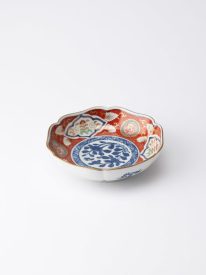
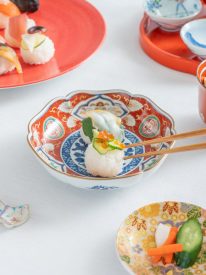
This mokko-shaped small bowl features a modern interpretation of the traditional classic patterns of old Imari. Mokko is the name for a round squarish shape and is considered an auspicious shape which represents family prosperity. “Aka” means red and “dami” is the name for the technique where the artist first outlines the area to be…
This small-sized Japanese donburi rice bowl features peonies, framed by dark blue, lattice-like patterns, all rendered in the traditional nishiki-e style. Nishiki-e, meaning “brocade picture,” is a multi-colored woodblock print technique that revolutionized ukiyo-e during the Edo period (1603-1868 CE), when most prints were in black and white. The lid helps keep the food warm and…
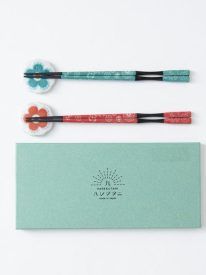
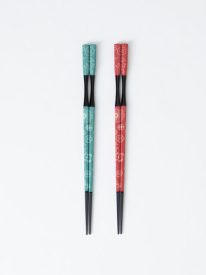
This Japanese chopsticks and chopstick rests set showcases a charming design of birds amidst a detailed floral pattern. The vibrancy of green and red adds a lively touch to your dining table. The chopsticks are crafted for easy holding with indented handles. Place the chopsticks on their matching rests for a perfectly coordinated setting right…
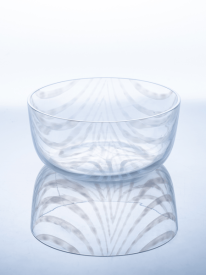
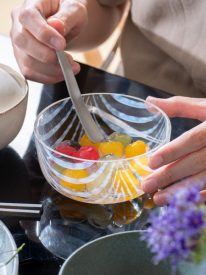
This is a glass bowl with makiage pattern from the Taisho Roman glass series by Hirota Glass, a long-established glass manufacturer in Tokyo. Makiage is a traditional tie-dyeing technique used in kimono making. This method creates intricate patterns that convey an aura of elegance and grace. This pattern is created by the aburidashi “invisible ink” technique,…
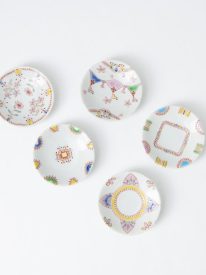
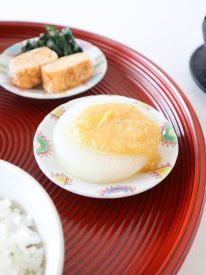
This set of five Japanese sauce plates features colorful patterns painted by artisans of Ginshu Kiln, which is especially known as its romantic and playful pastel colored painting. The painted areas have a slightly raised texture, a characteristic of Kutani ware, which is traditionally hand-painted using Japanese coloring pigments and a brush. Perfect size as…
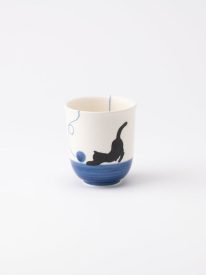
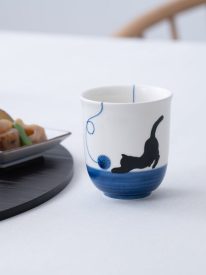
This easy-to-use Yunomi Japanese teacup features a cat playing with blue yarn on a smooth porcelain which is typical of Hasami Ware. The 160ml (5.4oz) is a little small, but it is the perfect size for drinking up a cup of green tea before it gets cold. It is light and easy to hold, so…
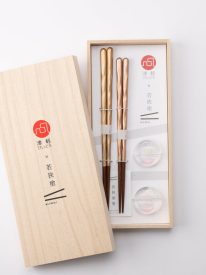
This set brings together the craftsmanship of Tsugaru Vidro from Aomori Prefecture and Wakasa lacquerware from Fukui Prefecture. It includes two pairs of chopsticksone in pink champagne gold and the other in champagne goldthat perfectly match the simple cherry blossom petal chopstick rests. The chopsticks have an undulated shape, offering a comfortable grip. Featuring a delicate…
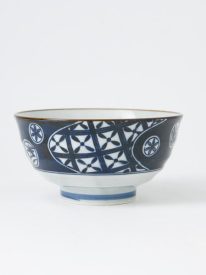
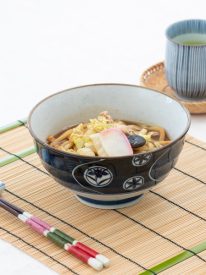
This regular-sized Japanese donburi bowl features a classic shonzui pattern, originally inspired by porcelain designs from the late Ming Dynasty in China. The intricate indigo patterns depict geometric figures and floral motifs, adding a timeless elegance to the piece. Crafted on a potter’s wheel, the bowl has a pleasing weight and a warm, tactile feel,…
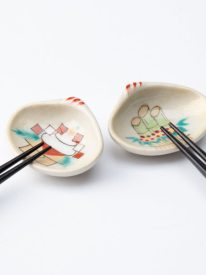
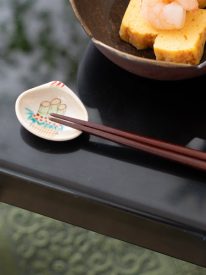
This set of chopstick rests are designed in the shape of shells, featuring a kadomatsu and kagami mochi motif. Kadomatsu, the decorative pine trees for New Year, and kagami mochi are traditional Japanese symbols used to welcome the New Year and to honor the gods. It is believed that Toshigami, a Japanese deity representing vitality, dwells…

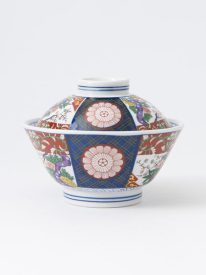
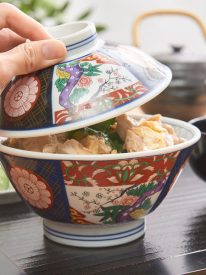
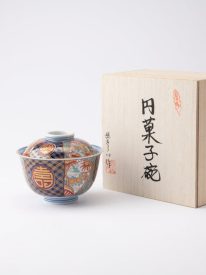 Yazaemon Somenishiki Kotobuki Pattern Kobachi Small Bowl with Lid
 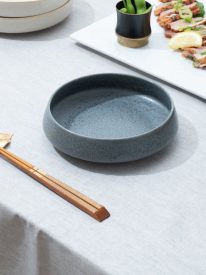 Kanoa Gray Deep Side Plate