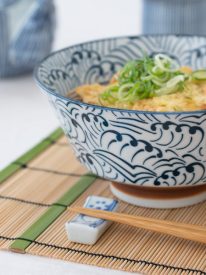
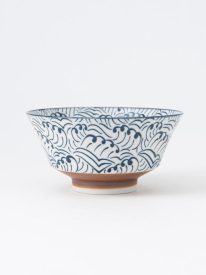
This regular-sized ramen bowl showcases a traditional seigaiha, or “wave” pattern in rich indigo blue, a motif that symbolizes good fortune in Japanese culture. Ideal for serving ramen, udon, or soba, this bowl enhances the presentation of your favorite noodles while bringing a touch of elegance and tradition to your table. Its versatile design also…
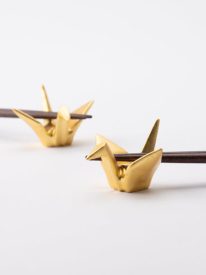
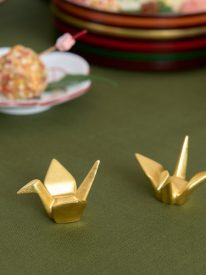
Decorate your table with a beautiful pair of golden crane chopstick rests. These chopstick rests are designed in the shape of cranes made by folded origami. In Japan, cranes are birds that are symbolic of longevity. These auspicious chopstick rests are made by skilled artisans at Hakuichi applying thin sheets of gold leaves to a…
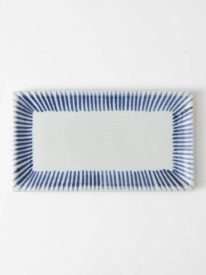
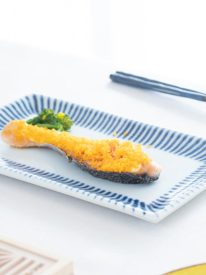
This rectangular plate features simple blue tokusa stripes, shaded with delicate hand-painting. Tokusa, inspired by the horsetail plant, symbolizes longevity in Japanese culture. The hand-painted indigo stripes along the edge add a subtle, elegant touch. The traditional and refreshing blue pattern, combined with the smooth texture of porcelain, makes every dish look more appetizing. It…
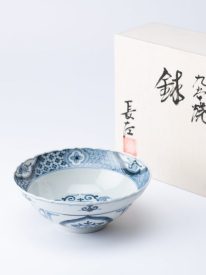
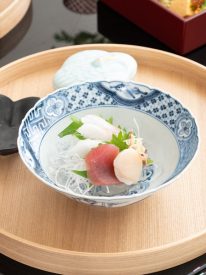
This bowl showcases exquisite sometsuke designs hand-painted by master craftsman Yamamoto Choza. Detailed depictions of ancient treasures are believed to invite good fortune and prosperity. On the bottom of the bowl is the fuyode pattern, named after the Japanese word for cotton rose, with petal-like windows embellished with auspicious motifs. The intricacies of each design…
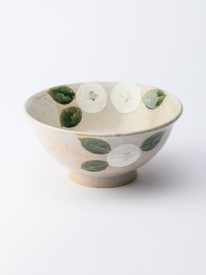
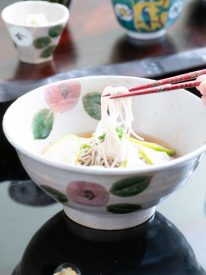
This ramen bowl from Musashi Kiln is adorned with charming red and white camellia motifs, reflecting the beauty of nature. Tsujii Musashi, the artisan behind the kiln, draws inspiration from his surroundings to create pieces that embody a subtle, rustic elegance. The bowl’s refined appearance is further enhanced by gohondenatural pinkish spots that emerge after…
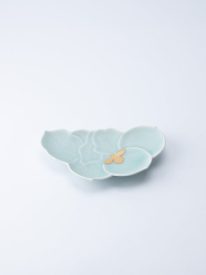
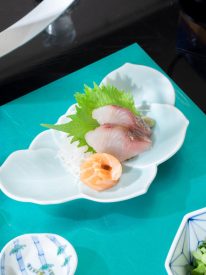
The graceful matte celadon texture of this persimmon-shaped plate conveys tenderness the moment you touch it. Accented with gold, the combination with the pale blue is graceful and sophisticated. The persimmon is a familiar fall delicacy that has been cultivated throughout Japan since ancient times because it is suited to the Japanese climate. With its…
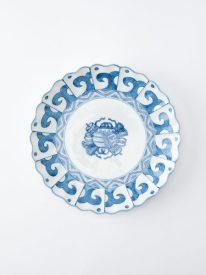
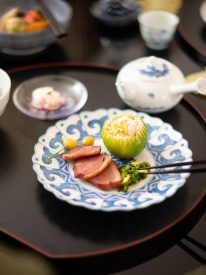
This side plate is a magnificent example of the artistry found in Mikawachi ware, featuring hand-painted designs in blue on fine, durable porcelain. The rim of the plate is adorned with the geometric patterns of shonzui-de waves, a style influenced by the porcelain patterns originally produced in Jingdezhen kilns during the late Ming Dynasty. At…
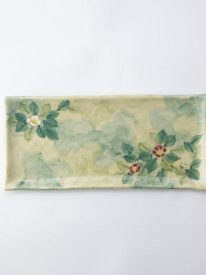
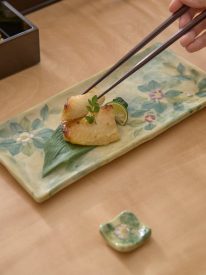
The surface of this plate radiates a milky luminance, courtesy of its glazed stoneware finish. The camellia design takes center stage, illustrating Taniguchi’s artistic evolution. Beginning with a solitary camellia, the design has been meticulously refined to incorporate leaves that harmoniously blend dark and light green shades. The petals, treated with white and red…
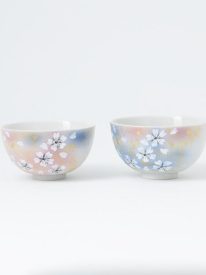
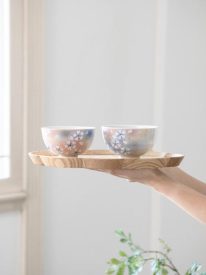
A pair of rice bowls decorated with hand-painted cherry blossoms and the falling petals blown in the wind. It painted in pale colors and sprinkled gold leaf, which is known as an iconic style of Kutani ware. In Japan, there is a culture of giving rice bowls as a gift to married couples to…
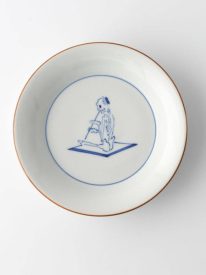
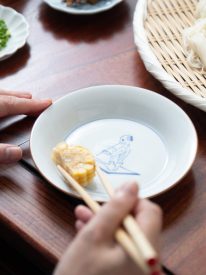
A unique side plate featuring a skeleton playing a vertical flute. This kind of free-spirited, playful design is iconic to Kutani Choemon and serves as a wonderful example of how traditional craftsmanship meets modern creativity. This versatile side plate is perfect for serving small portions, desserts, or snacks during meals and tea time. It can…
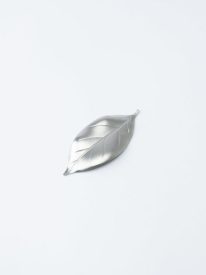
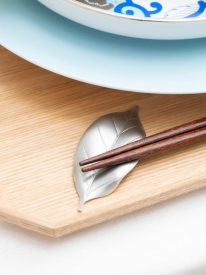
This is a stainless steel chopstick rest in the shape of a camellia leaf in silver. It is made in Tsubame Sanjo, which accounts for 90 percent of domestic production of metal tableware.It expresses the thickness, undulation, and curves of a camellia leaf, and is designed by Kaichiro Yamada, KAICHI DESIGN, which has won awards…
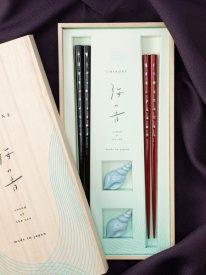
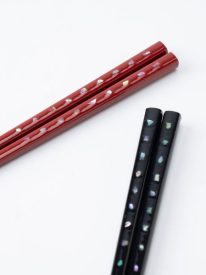
These chopsticks from Matsukan’s Sound of the Sea series are fully coated in lacquer, showcasing the raden technique, where shimmering mother-of-pearl is embedded into the surface. The accompanying chopstick rests are crafted using a seashell-shaped mold originally used to make rakugan, a traditional Japanese confectionery. After an initial ten layers of natural lacquer, shell inlays…

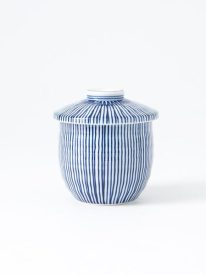 Fukuhou Kiln Tokusa Hasami Chawanmushi Bowl