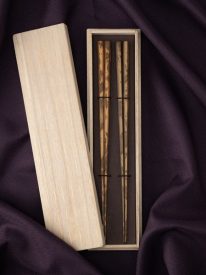
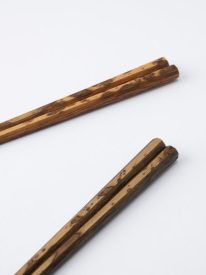
This set of chopsticks features the unique zumen bamboo from Kyoto. Random patterns adorn one side of each chopstick, lending a traditional and elegant appeal. Enjoy their rustic natural charm in two subtle shades of brown. Zumen bamboo refers to dappled or mottled bamboo and is the work of skilled craftsmen, who use specialized techniques….
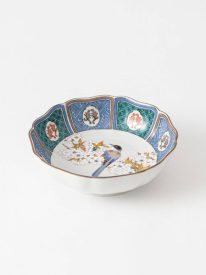
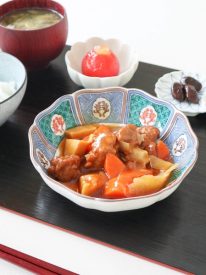
This Japanese bowl features a delicate painting of a bird perching on the Sakura branch. A traditional Japanese pattern is drawn around it, making it a gorgeous bowl. It is hand-painted by brush, using Japanese coloring paint which is one of the remarkable features of Kutani ware, as you can see the painted part is…
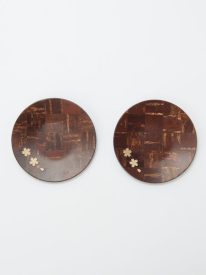
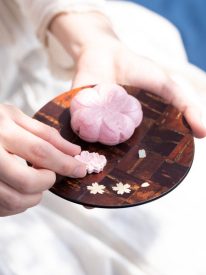
This charming set of two round side plates is crafted from cherry bark, showcasing the natural beauty of this material. Each plate features a checked pattern with cherry blossom detailing. Although small in size, these plates are big in character. The cherry bark has a beautiful natural luster, a deep sheen that seems to shift…
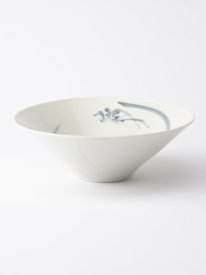
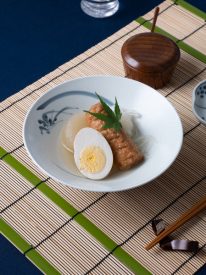
This is a serving bowl by Ri Sanpei (Yi Sam-pyeong) Kiln, a brand by the descendant of Yi Sam-Pyeong, the discoverer of white porcelain ore for Arita ware. The simple design with flowing orchids can be used for any menu. This is one of Ri Sanpei (Yi Sam-pyeong) Kiln’s most popular and classic products.Using the same Izumiyama…
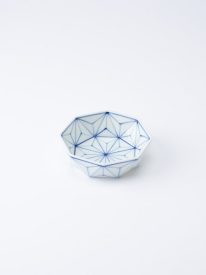
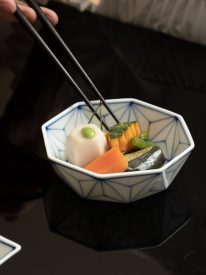
This Kobachi bowl features the traditional Japanese hemp leaf pattern. The hemp leaf is considered as a symbol of good luck meant to ward off evil and is commonly used on kimono and tableware. Employing a technique of “Sometsuke” (underglaze cobalt blue) painting on a base brilliantly fired to a pure white, each piece is…
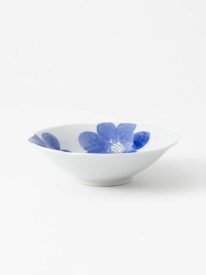
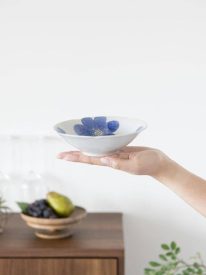
This beautiful bowl features soft blue flowers as if painted with watercolors. The bright design and shape of the rim resembles blooming flowers, bringing joyful atmosphere on the table. It is painted by the female artist, Alyne Ohigashi, who was born in Philippines. She uses a unique technique called washi-zome (Japanese paper dyeing) and continues her…
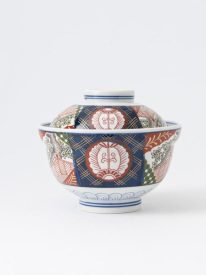
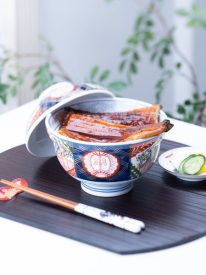
This large-sized Japanese donburi rice bowl features sakura, or cherry blossoms, framed by dark blue, lattice-like patterns, all rendered in the traditional nishiki-e style. Nishiki-e, meaning “brocade picture,” is a multi-colored woodblock print technique that revolutionized ukiyo-e during the Edo period (1603 CE-1868 CE), when most prints were in black and white. The lid helps keep…
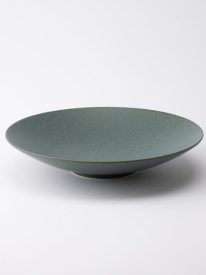
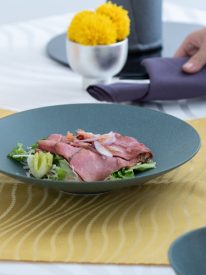
This is an easy-to-use deep plate characterized by a moody green color, reminiscent of a deep forest. Instead of shiny, bright gems, the design is chic and modern, featuring subdued tones and matte textures like Jade gemstones. The deep green tones go well with warm-colored foods such as red, yellow, and orange. Even a few bright…
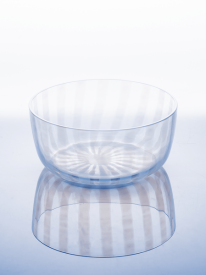
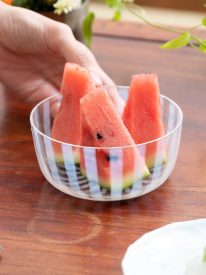
This is a glass bowl with the tokusa “horsetail” pattern from the Taisho Roman glass series by Hirota Glass, a long-established glass manufacturer in Tokyo. The tokusa motif, cherished since the Edo period (1603 CE-1868 CE), symbolizes growth and prosperity. Its straight, upward-reaching lines embody aspirations for success and flourishing, making it a beloved design through…
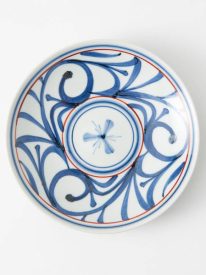
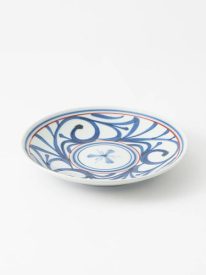
This dinner plate features a hand-painted arabesque pattern, a signature motif of Tobe ware. The swirling lines are accented with fine red details along the inner rim, adding a subtle vibrancy to the traditional motif. With its thick, rounded rim, this plate brings a soft, welcoming feel to your table. Durable and crafted for long-term…
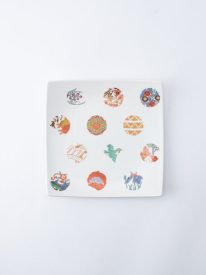
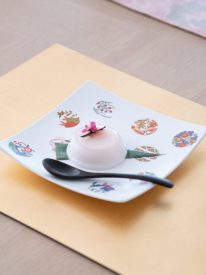
This side plate is adorned with circular motifs featuring auspicious patterns. Bright and cheerful, the circles of this surface feature both birds and floral designs that lend a festive air. The soft matte texture gives the whole piece a sophisticated feel. This item is created by the Rebirth Project, an organization that conducts various social contribution activities,…
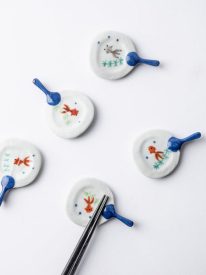
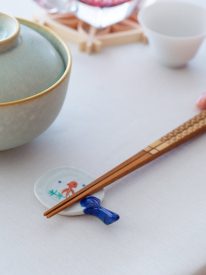
These five paper fan-shaped chopstick rests all feature different designs of goldfish in the water. One of the designs is of an inky black goldfish and the other four are brilliant red fish. According to Feng Shui beliefs, the red goldfish bestows good luck while the black goldfish absorbs negative energy. Furthermore, the water plants…

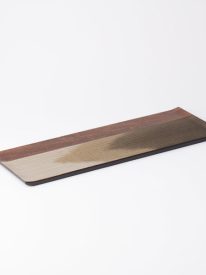 Tin Ginsai Echizen Lacquerware Serving Tray
 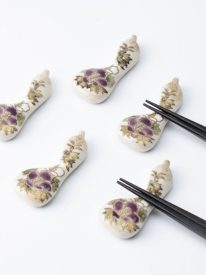 Hozan Kiln Hibiscus and Gourd Kyo Ware Chopstick Rest Set