This kobachi small bowl is a beautifully decorated item reflecting the high-quality craftsmanship handed down for generations within Arita Porcelain Lab’s long history. The technique displayed in this bowl is called somenishiki where the bowl is first glazed with white and blue patterns and then is further decorated with detailed hand painted drawings. The character in a…
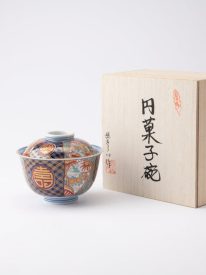
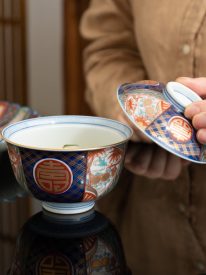
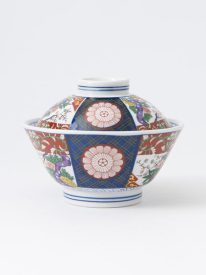
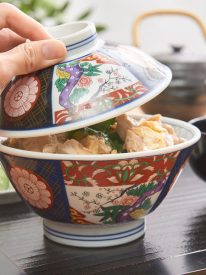
This small-sized Japanese donburi rice bowl features peonies, framed by dark blue, lattice-like patterns, all rendered in the traditional nishiki-e style. Nishiki-e, meaning “brocade picture,” is a multi-colored woodblock print technique that revolutionized ukiyo-e during the Edo period (1603-1868 CE), when most prints were in black and white. The lid helps keep the food warm and…
This porcelain sauce plate is painted with an elegant traditional pattern in white, decorated with the pattern called “hanazume,” giving an image of flowers blooming all at once. While Kutani ware is loved for its vibrant colors, the hachi-kutani series features sauce plates all in white. They are made at Seikou Kiln. Seikou Kiln researched Japanese overglaze…
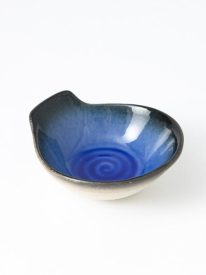
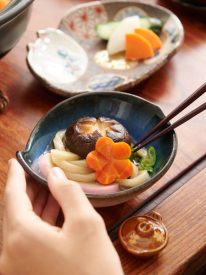
This bowl stands out with its stunning indigo glaze. The exterior has a slightly rough texture, preserving the natural warmth and character of the clay. Created with its unique shape as a tonsui, this bowl is primarily intended as a serving bowl for hot-pot dishes. It also works wonderfully for holding noodle dipping sauces or as…
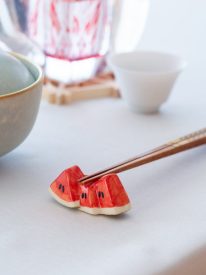
These triangular cut watermelon chopstick rests are the perfect addition to your dining table. The vivid colors and clear transparency will impart a feeling of natural freshness to your mealtime decor. Only the watermelon in the middle has the bite marks, making it a good design for placing chopsticks. Perfect for summer dining tables and embodying all…
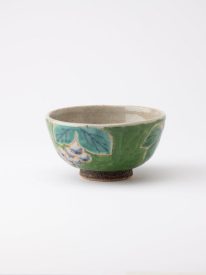
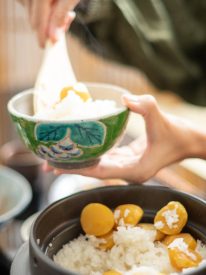
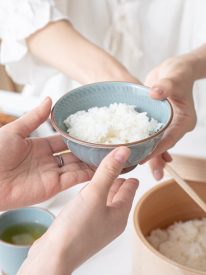
This is a Hasami ware rice bowl made by Kousai Kiln. It is handpainted to bring out the warm texture of the clay. The base of the rice bowl is finished in green with a blue grape and leaf design. The rough texture of the clay is coated with a glossy, bright glaze that offers different textures….
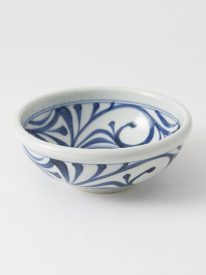
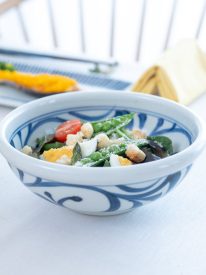
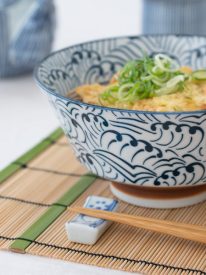
This medium bowl features a hand-painted arabesque pattern, a signature motif of Tobe ware. The deep indigo hue adds a modern touch to its traditional design. Sized for versatility, it’s perfect for daily use, whether serving salads, simmered dishes like nikujaga, or cold udon and soba noodles. The wide shape comfortably holds each dish, enhancing…
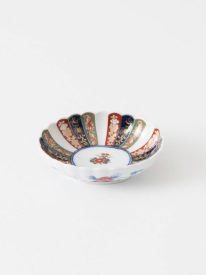
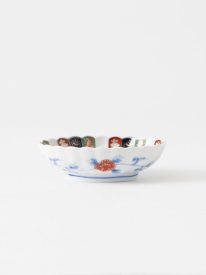
This gorgeous kobachi small bowl features a modern interpretation of classic old Imari patterns. Its vivid colors, paired with gold and white, lend a sophisticated flairideal both for everyday use and as a special gift for anyone who appreciates Japanese arts and crafts. Sized for side dishes like sunomono (vinegared items), aemono (seasoned dishes), or…
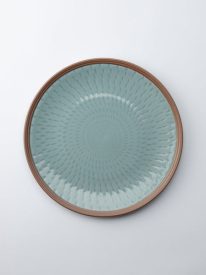
Featuring a round plate exposing the outlines of the red clay, an exquisite balance between the elegance of emerald celadon and the rustic red soil. The glazed surface is smooth with shallow grooves characteristic of “Tobikanna” (chattered pottery). A combination of a century old tradition of Kyoto Celadon pottery, and the folk craft of Kyushu Koishikawara ware,…
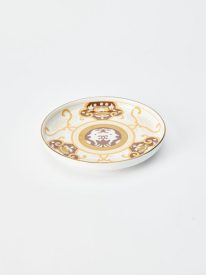
This is a versatile side plate that can be used for individual servings. The design is the traditional old Imari floral pattern and is given a modern remake with a combination of gold and yellow gold. Perfectly sized for appetizers, side dishes or as a bread plate, this stunning plate adds both functionality and style…
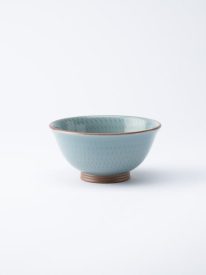
The meditative depth of celadon blue allures us into even forgetting that this a bowl of daily tableware. The bowl’s base is clear and smooth with its luminous shine, while the upper surface has delicately carved grooves of the technique of “Tobikanna” (chattered pottery). The rim exposes the outlines of the red clay, an exquisite…
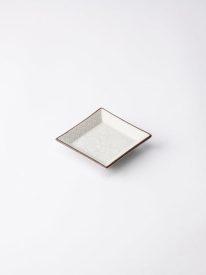
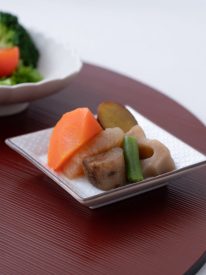
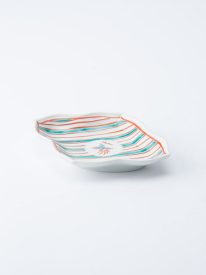
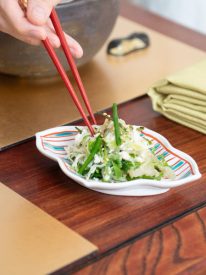
This is a side plate with vibrant colors, featuring hand-painted images that leave a lasting impression and evoke a soft, comforting atmosphere. The unique silhouette of this plate is called “Hishi-gata” in Japanese, inspired by the leaves of the diamond-shaped plant called “Hishi.” It is known for its robust vitality, has been favored as a…


 Wave Mino Ware Ramen Bowl M
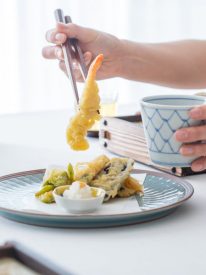
 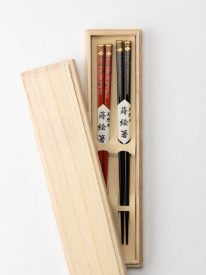 Pine, Bamboo and Plum Chopsticks Pair Set
 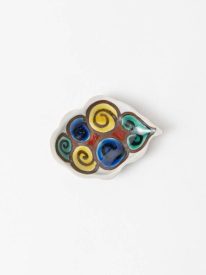 Iridescent Clouds Sauce Plate
 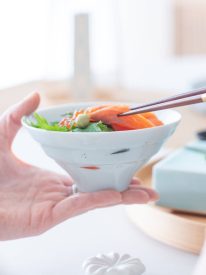 Medaka Rice Fish Japanese Rice Bowl
 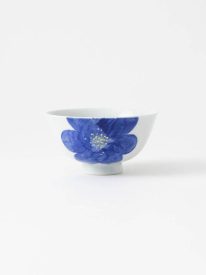 P.S. Blue Japanese Rice Bowl