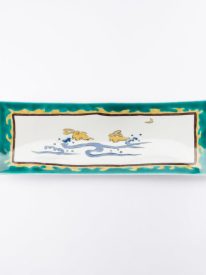
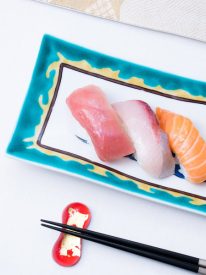
This rectangular platter, painted in the Ko-Kutani (old Kutani) styleone of the most distinguished painting styles of Kutani warefeatures two rabbits and a flowing stream of water. Completely hand-painted, the vibrant colors stand out beautifully against the pristine white background, creating a striking contrast. Even the foot of the platter is finished in green, showcasing…
This small porcelain plate has auspicious design patterns: “Nami Chidori,” plovers and waves, and “Karakusa,” an arabesque design. Nami Chidori, a combination of a plover and a wave, means “to overcome rough seas together.” Arabesque designs are considered a symbol of longevity and prosperity of offsprings, as arabesque, the vine, extends its stems in all directions….
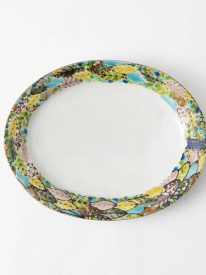
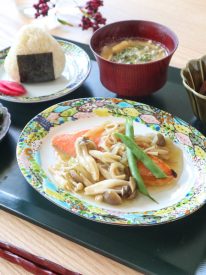
This beautiful Japanese oval plate from the Hamorebi seriesmeaning “sunlight filtering through leaves”is hand-painted by female artisan Sakurai Chie. Each piece is meticulously brushed using traditional Japanese color paints, a distinctive feature of Kutani ware. The painted areas are slightly raised, adding texture and depth to the design. The elegant oval shape offers a distinctive…
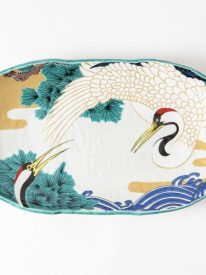
This beautifully crafted platter features the design of two cranes facing each other. The pine trees and waves drawn in the background are common sights on the coast of Japan where pine trees are often planted. It is an eye-catching plate with beautiful colors and bold composition of Kutani color. It is hand-painted by brush,…
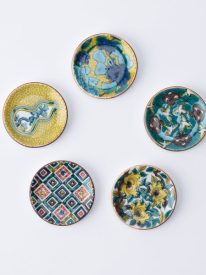
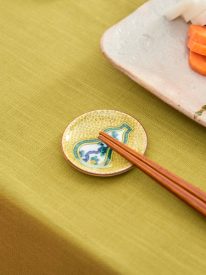
This elegantly crafted Kutani ware chopstick rest set includes five pieces, each featuring designs that bring traditional charm and intricate detail to your dining table. Adorned with traditional patterns, these chopstick rests showcase Kutani ware’s signature gosai overglazea “five-color” technique expertly applied to porcelain. Each of the five unique motifs decorates the surface, creating a harmonious design….
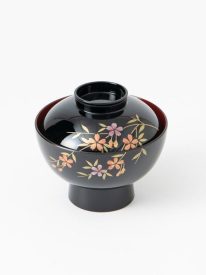
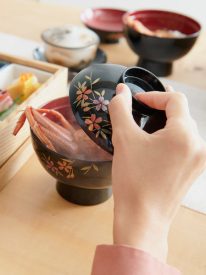
This is a large soup bowl with a lid. The glossy texture of the surface is beautiful, and the painting of colorful sakura flower give it an elegant atmosphere. The elegant design with tall footing and lid, it is an ideal soup bowl for ceremonial occasion. At New Year’s in Japan, people enjoy a traditional soup…
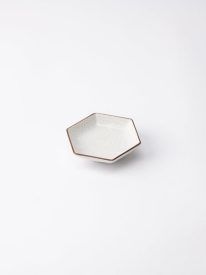
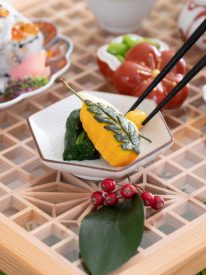
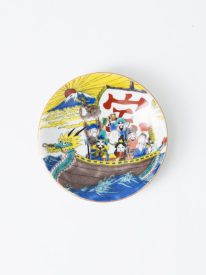
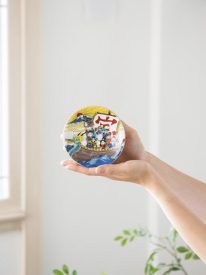
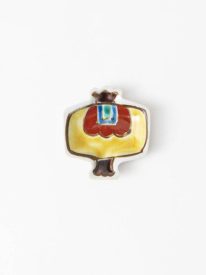
This sauce plate is decorated with a design of the Seven Lucky Gods on a treasure, which is believed to bring many blessings. It is perfect for celebrating special occasions and show your gratitude to others. It is an ideal plate for serving sauces or snacks like nuts and candies. Or you may serve a…
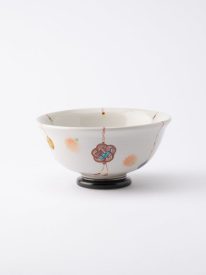
This large rice bowl is decorated with gorgeous and lovely mizuhiki motif. The colorful knots give the bowl a nostalgic and graceful feeling.Kanazawa, the birthplace of Kutani ware, is known for its unique and rare traditional craft called Kaga Mizuhiki. Made by Kokuzou Kiln, known for the gentle and warm stoneware with beautiful colors and elegant…
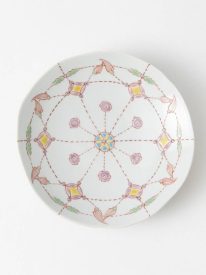
The bowl features a beautiful contrast of brilliant colors on a white canvas, making the most of the distinctive texture of porcelain. The fine touch of the geometric pattern is hand-painted by an artisan from Ginshu kiln, which is especially known for its romantic and playful painting. The painted areas have a slightly raised texture,…
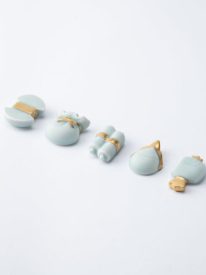
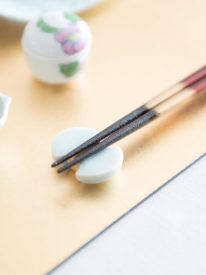
This set of chopstick rests features motifs inspired by various treasures, bringing charm and meaning to your table setting. The graceful matte celadon texture conveys tenderness the moment you touch it, complemented by a moist and gentle surface finish. The treasures depicted in this set include a counterweight, a treasure bag, a scroll, a wish-granting…
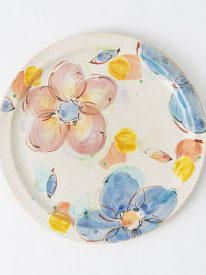
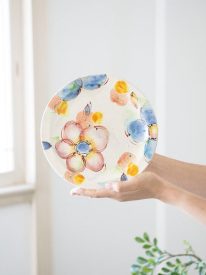
This plate has a warm texture of stoneware and lovely hand-painted soft pink and blue flowers. It is made by Kokuzou Kiln, known for its gentle and warm stoneware, and features beautiful watercolor-like painting and elegant designs which blend in modern life style.The large size of this plate allows you to serve any kind of…
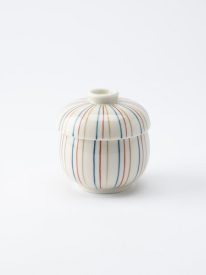
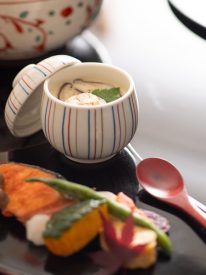
Enjoy delicious chawanmushi, Japanese steamed egg custard, in this beautiful Arita ware chawanmushi bowl. This Chawanmushi bowl is painted in the “Tokusa (Horsetail)” pattern which is a classic motif that has been beloved since the Edo period (1603 CE – 1867 CE). Its straight-growing appearance symbolizes wishes for growth and prosperity. And the three subdued colors…


 Mallet of Luck Sauce Plate