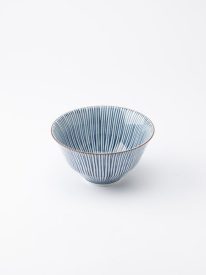
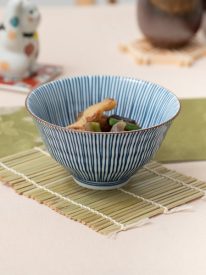
This small-sized donburi bowl from Fukuhou Kiln features the traditional Japanese tokusa “horsetail” pattern. Its depth helps retain the food’s warmth while adding a touch of style and practicality. Beloved since the Edo period (1603 CE-1868 CE), this pattern of straight vertical lines is inspired by the Japanese plant tokusa, known in English as rough…
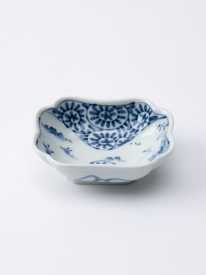
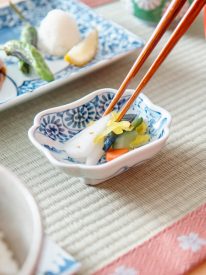
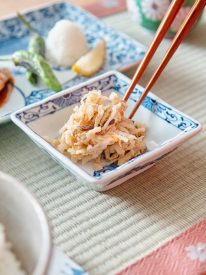
This indigo-dyed, rectangular kobachi small bowl is crafted by Takayama, a renowned maker of Hasami porcelain. The interior of the plate is delicately decorated with a serene landscape scene, beautifully framed by the traditional octopus arabesquetako karakusapattern. This design, featuring endlessly winding vines, has long been cherished in Japan as an auspicious motif symbolizing longevity and…
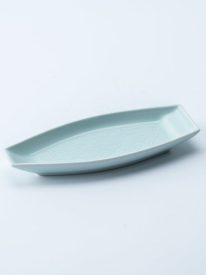
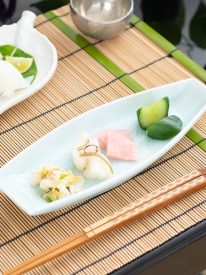
This boat-shaped dinner plate showcases a beautiful celadon glaze with a gradient of light blue. Designed like a boat, it is an eye-catching item just by placing it on the table. The seigaiha “wave” pattern symbolizes good fortune, with its spreading ripples representing the expansion of positive relationships. It is an excellent piece for serving…
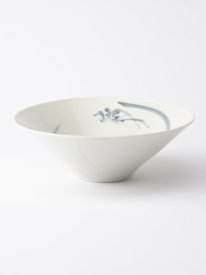
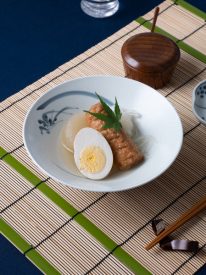
This is a serving bowl by Ri Sanpei (Yi Sam-pyeong) Kiln, a brand by the descendant of Yi Sam-Pyeong, the discoverer of white porcelain ore for Arita ware. The simple design with flowing orchids can be used for any menu. This is one of Ri Sanpei (Yi Sam-pyeong) Kiln’s most popular and classic products.Using the same Izumiyama…
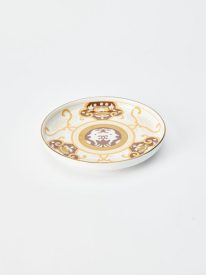
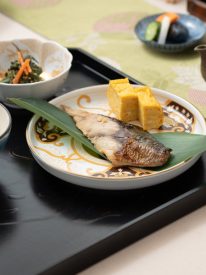
This is a versatile side plate that can be used for individual servings. The design is the traditional old Imari floral pattern and is given a modern remake with a combination of gold and yellow gold. Perfectly sized for appetizers, side dishes or as a bread plate, this stunning plate adds both functionality and style…
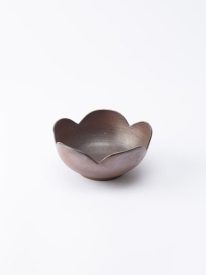
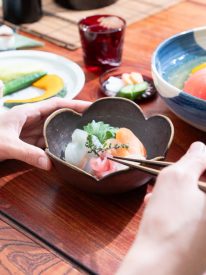
The Hozan Kiln’s Flower-Shaped Kobachi Bowl embodies the earthy textures and colors characteristic of Bizen ware. Its coarse texture, exquisite hues, and intricate patterns, shaped by the kiln’s flames, exemplify Bizen warethe art of clay and fire. Without any artificial decorations, the bowl stands out with its bold presence. The petal-shaped rim displays natural hues…
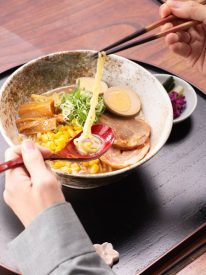
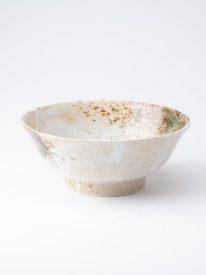
This regular-sized ramen bowl showcases the soft, earthy tones of Shino ware, with shades of brown and green blending seamlessly into a white base. It features a generous application of white glaze, creating a speckled appearance, while the unglazed areas highlight a beautifully rough texture. Originating in Gifu Prefecture during the Azuchi-Momoyama period (1573 CE-1603…
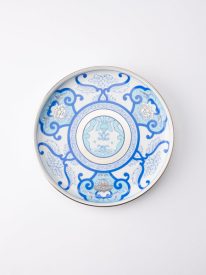
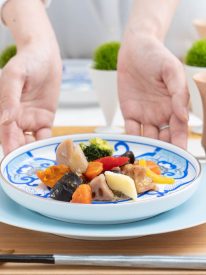
This is a beautiful side plate decorated in an old Imari floral pattern painted with precision.The blue tones are arranged in a modern way, and each piece is individually brushed by craftsmen to create an incomparable elegance. Many of the designs are arranged with traditional auspicious designs, making the tableware suitable for the modern dining…
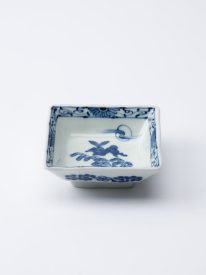
This square kobachi small bowl is crafted by Takayama, a renowned maker of Hasami porcelain, and dyed with seitan, a kind of indigo. The inside of the bowl is beautifully adorned with a design of a rabbit leaping under the moon and the traditional seigaiha pattern of blue ocean waves. The seigaiha motif depicts gently…
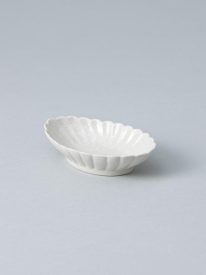
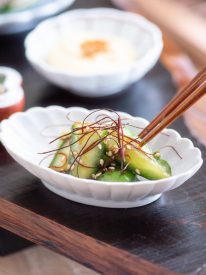
This chrysanthemum-shaped oval sauce plate features a matte white color, overlaid with a white speckled glaze that looks like snow. Chrysanthemum is a shape often used in Japanese tableware. Chrysanthemums have meanings such as “love” and “true strength” and are known as an auspicious motif. Perfect size as a sauce plate. It is also versatile…
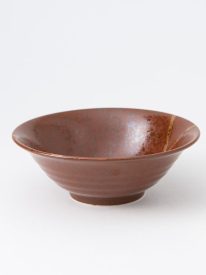
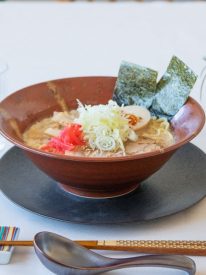
The popular children’s game of ayatori “cat’s cradle” serves as a unique design inspiration for this regular-sized ramen bowl. The bowl’s deep red-brown surface is elegantly adorned with bold, intersecting lines in light brown, reminiscent of the game’s threads. Shaped using a potter’s wheel, this piece has a pleasant weight and warmth to the touch that…
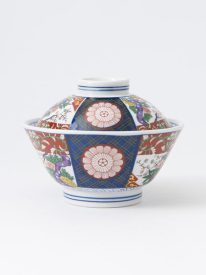
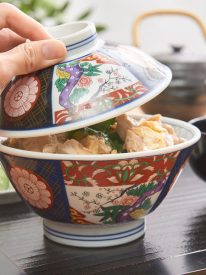
This small-sized Japanese donburi rice bowl features peonies, framed by dark blue, lattice-like patterns, all rendered in the traditional nishiki-e style. Nishiki-e, meaning “brocade picture,” is a multi-colored woodblock print technique that revolutionized ukiyo-e during the Edo period (1603-1868 CE), when most prints were in black and white. The lid helps keep the food warm and…

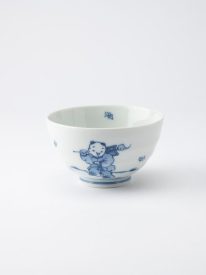 Karako Rice Bowl
 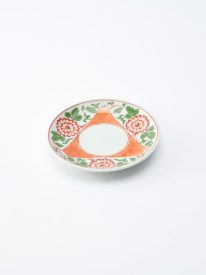 Chrysanthemum with MT. Fuji Sauce Plate
 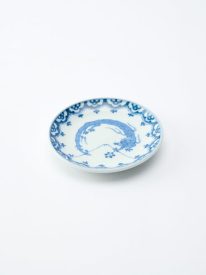 Dragon with Mt. Fuji Sauce Plate