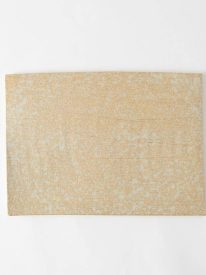
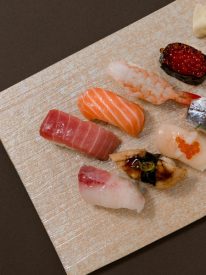
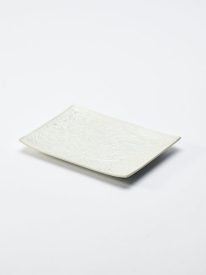
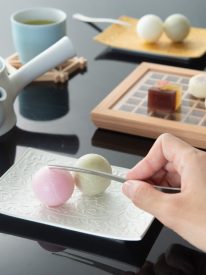
This modern, versatile plate showcases a textured white surface, crafted by layering shades of white paint to create depth and a sophisticated finish. Its sleek, minimalist design makes it an exceptional choice for presenting a range of dishes. Perfect for serving sashimi, sushi, or tempura, it also doubles as an elegant tray for a matcha…
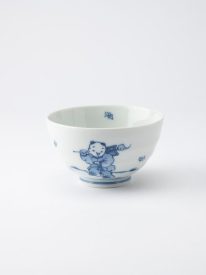
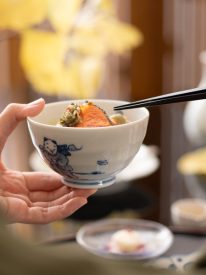
This splendid rice bowl, adorned with delicately painted karako, Chinese-style playful children, encapsulates the essence of playful elegance. Meanwhile, the interior features a single butterfly, displaying both a narrative quality and refined simplicity. Holding this charming bowl in your hand, you can feel the lightness and thinness characteristic of Mikawachi ware. It displays an exquisite gradation,…
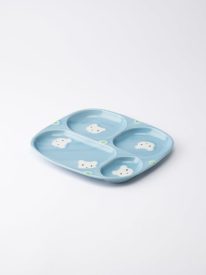
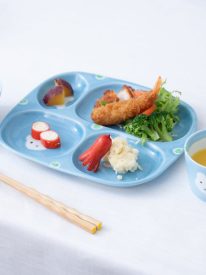
Children will loving eating from this adorable Hasami ware plate designed with little bear faces. The base of the plate is in a soft pastel blue color with green polka-dots. The polka-dots are drawn in a thicker paint that gives a bit of texture on the smooth Hasami ware porcelain. The plate is divided into…
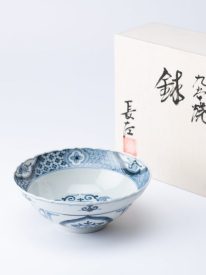
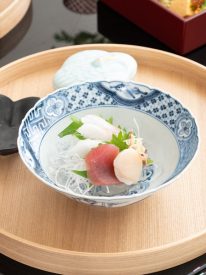
This bowl showcases exquisite sometsuke designs hand-painted by master craftsman Yamamoto Choza. Detailed depictions of ancient treasures are believed to invite good fortune and prosperity. On the bottom of the bowl is the fuyode pattern, named after the Japanese word for cotton rose, with petal-like windows embellished with auspicious motifs. The intricacies of each design…
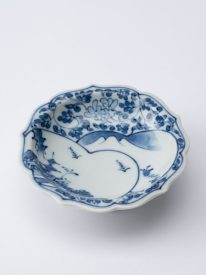
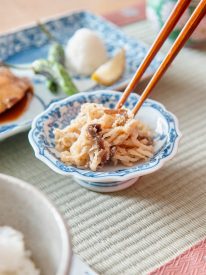
This sauce plate is crafted by Takayama, renowned for Hasami porcelain. Its surface features intricately detailed scenes of Japanese landscapesrolling mountains, winding rivers, boats, and templesneatly arranged within fan-shaped frames, all set against a background of abundant flowers. The result is reminiscent of a scroll painting, allowing you to appreciate its delicate and refined atmosphere. …
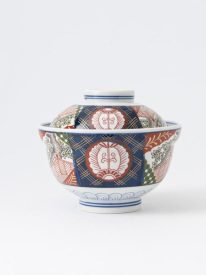
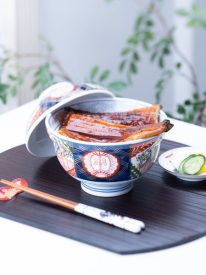
This large-sized Japanese donburi rice bowl features sakura, or cherry blossoms, framed by dark blue, lattice-like patterns, all rendered in the traditional nishiki-e style. Nishiki-e, meaning “brocade picture,” is a multi-colored woodblock print technique that revolutionized ukiyo-e during the Edo period (1603 CE-1868 CE), when most prints were in black and white. The lid helps keep…
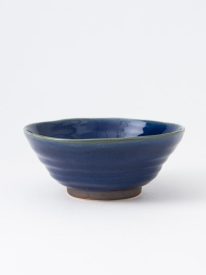
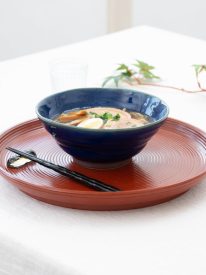
This bowl features a stunning glossy indigo glaze. The hand-shaped rim, crafted on a potter’s wheel, showcases graceful organic lines that give the bowl a unique rustic elegance. Its lustrous finish adds a layer of sophistication, enhancing your dining experience. It’s perfect for serving noodles such as ramen, udon, and soba. Its size also makes…
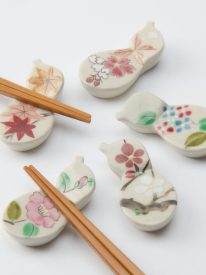
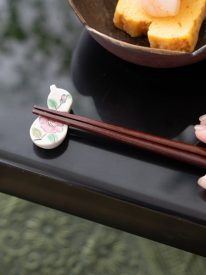
This is a unique gourd-shaped chopstick rest set by Hozan Kiln of Kyo ware. The gourd shape, which spreads out at the bottom, has been considered a good luck charm for warding off disasters and bringing in happiness since ancient times in Japan. Each chopstick rest features a painting of a different flower – plum…
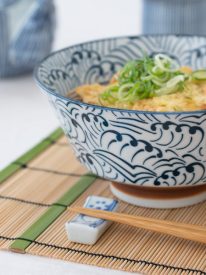
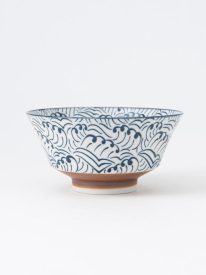
This regular-sized ramen bowl showcases a traditional seigaiha, or “wave” pattern in rich indigo blue, a motif that symbolizes good fortune in Japanese culture. Ideal for serving ramen, udon, or soba, this bowl enhances the presentation of your favorite noodles while bringing a touch of elegance and tradition to your table. Its versatile design also…
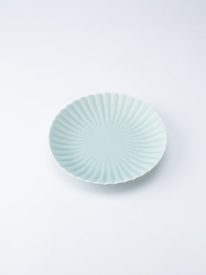
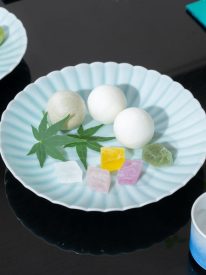
The graceful matte celadon texture of this chrysanthemum-shaped main plate conveys tenderness the moment you touch it. The chrysanthemum petals are intricately engraved with varying depths, creating a harmonious interplay of detailed patterns beautifully enhanced by the exquisite shading of the celadon porcelain. Perfect for serving main courses in a Japanese meal or desserts, this…
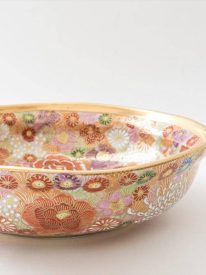
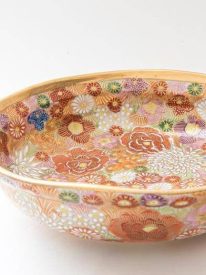
This elegant bowl features a delicate Hanazume style, meaning filled with flowers, one of the most notable design of Kutani ware which has been handed down the Taisho period (CE 1912-1926). Filled with colorful flowers all over the body with gold trimming, it has a timeless elegance and sophistication created by hand drawn technique; there…
With its delicate, almost lace-like monochromatic elegance, this silver-colored plate is a unique take on a floral pattern from a dyeing technique originally imported to Japan from India. Sarasa, better known in the West as chintz or calico, is presented here in a luxurious and sophisticated style. Sarasa patterns were seen in dyed cotton textiles…

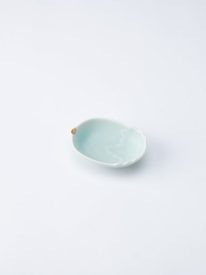 Moist Gold Gourd Shape Sauce Plate
 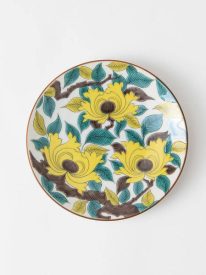 Yellow Peony Side Plate
 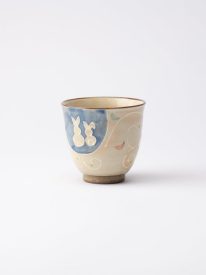 Aizen Kiln Indigo Blue Rabbit Hasami Children's Large Cup