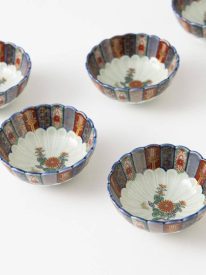
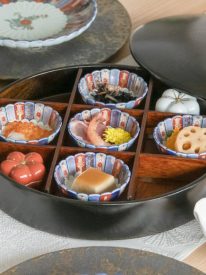
This kobachi small bowl set of 5 has a chrysanthemum shape decorated with patterns, which made by modern interpretation of old Imari. The perfect balance of vivid colors, gold and white makes it a classy and stunning piece. It is a great size as a kobachi serving side dishes such as sunomono (vinegared food), aemono (seasoned…
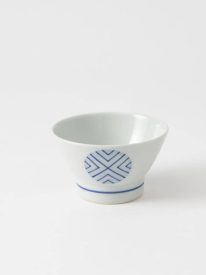
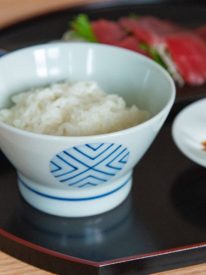
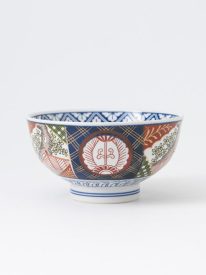
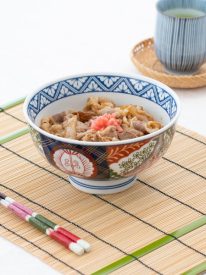
This rice bowl showcases the traditional marunuki pattern. Its indigo shade adds a modern touch, while the hand-painted nature motifs bring warmth and character to each piece. The high footing makes it easy to hold, adding practicality to its charm. Perfectly sized for a single serving of rice, its simple yet classic design makes white…
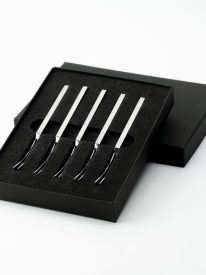
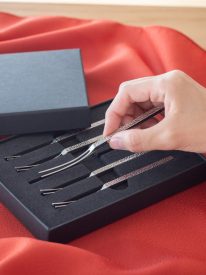
This is a set of five fruit forks from the “MODERN WABI SABI” series. It is characterized by a fusion of traditional and stylish ambiance. These forks are crafted in Tsubame-Sanjo, a region that accounts for 90% of domestic metal utensil production in Japan. This elegant and high-quality cutlery is designed by Yuka Nishida, a…
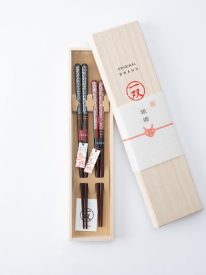
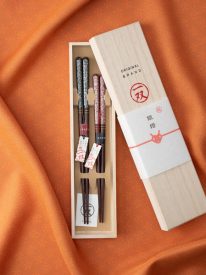
Mark happy moments together with the Ginkon Celebration chopstick set. Named after ginkon, meaning silver anniversary, this set includes two pairs of dark brown-lacquered wood chopsticks with silver-decorated tops. They combine the elegant sheen of traditional lacquerware with a sophisticated design. The longer pair measures 23 cm (9 in) and features a black and silver…
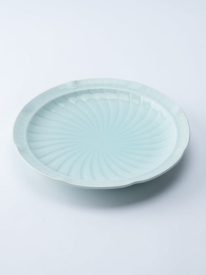
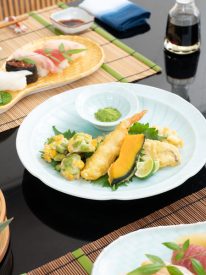
This round celadon plate is generously sized and its depth makes it ideal for serving various dishes at family gatherings or parties. Celadon porcelain, with its beautiful gradient from white to light blue, enhances dish presentation and imparts a cool, refreshing feel. Ideal for colorful dishes like small Japanese sweets, it captivates on the table….
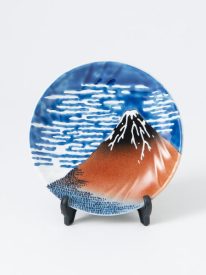
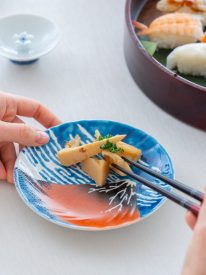
The plate features Red Fuji, capturing the moment of the rising sun turning Mount Fuji red in a clear early morning. With the combination of Kutani ware with the masterpiece of the genius artist Hokusai Katsushika, the plate has truly an eye-stopping charm for anyone. The size is great for serving side dishes, pieces of…
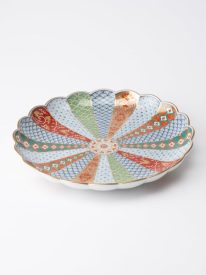
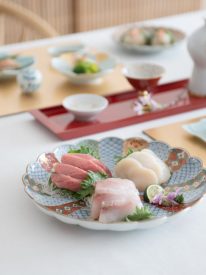
This is a gorgeous large plate with a “chrysanthemum split” design in old Imari style. The lines extend from the outside to the center and are decorated with different traditional patterns.” Each has its own meaning, such as “seigaiha,” “shigebishi,” and “zuiun.” “Seigaiha” (blue ocean waves) – a symbol of prosperity. “Shigebishi” (dense diamonds) –…
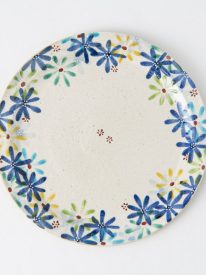
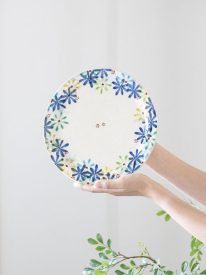
This plate has a warm texture of stoneware and is decorated with lovely hand-painted blue flowers around the rim. It is made by Kokuzou Kiln, known for its gentle and warm stoneware, and features beautiful water color-like paintings and elegant designs which blend in well with our modern life style. The large size of this…
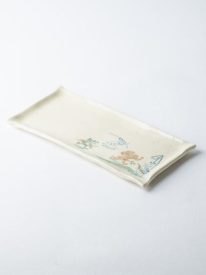
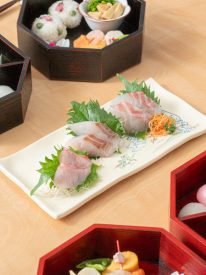
Featuring the distinctive “nami-yu” glaze, which is made from the ashes of the Kyoto forest, this rectangle plate has a natural base color in yellowish cream-white. It depicts the famous illustrated scroll named “Choju Giga” which is a caricature picture scroll depicting anthropomorphic animals and their playfulness, dating from the 12th to 13th centuries. Founded in…
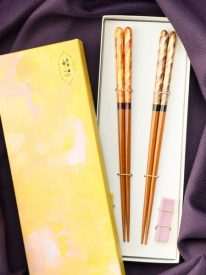
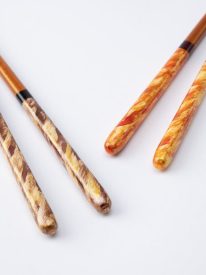
These hand-painted chopsticks from Matsukan’s Crystal series embody the seasonal beauty of autumn and winter. Drawing inspiration from hidamarithe enchanting play of sunlight on a chilly daythese chopsticks are exquisitely crafted to capture the essence of each season’s palette. Autumn comes alive in vivid orange tones, evoking the essence of fall twilight. Winter is depicted…
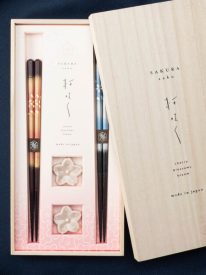
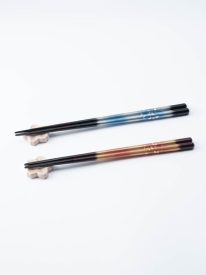
The essence of a soft spring breeze weaving through delicate cherry blossoms is eloquently expressed in this set of two pairs of chopsticks. An elegant harmony ensues as the cherry blossom motif on each chopstick dances over soft silvery blue and gold. The black Wakasa lacquer base of the chopsticks creates a wonderful contrast with…
This regular-sized Japanese donburi rice bowl features sakura, or cherry blossoms, framed by dark blue, lattice-like patterns, all rendered in the traditional nishiki-e style. Nishiki-e, meaning “brocade picture,” is a multi-colored woodblock print technique that revolutionized ukiyo-e during the Edo period (1603-1868 CE), when most prints were in black and white. The bowl is perfect…

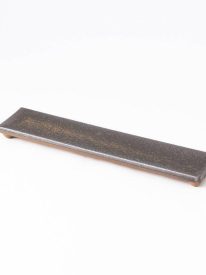 Ash Glaze Long Rectangular Platter
 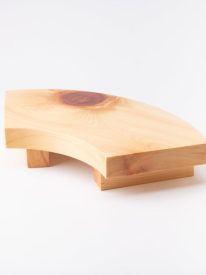 Miyabi Urushi Fan Shape Kiso Woodwork Sushi Plate 13.8in
 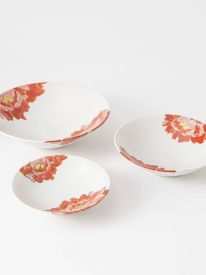 Red Peony Bowl Set A
 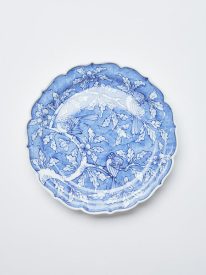 Flower and Birds Bellflower Rim Dinner Plate
 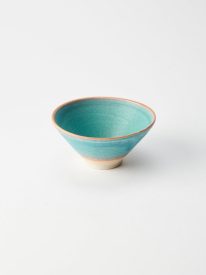 Summum Japanese Rice Bowl
 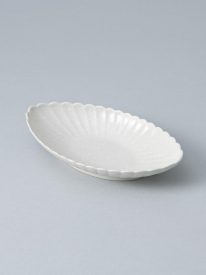 White Chrysanthemum Oval Dinner Plate
 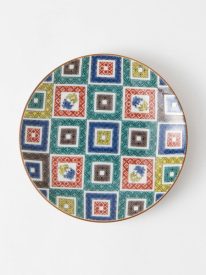 Color Tiles Side Plate
 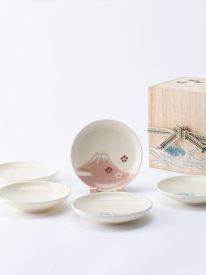 Tosen Kiln Mt. Fuji Kiyomizu Ware Sauce Plate Set
 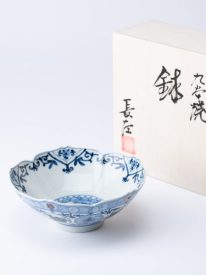 Myousen Toubou Auspicious Pattern Sakura-Shaped Kutani Bowl 6.7 in
 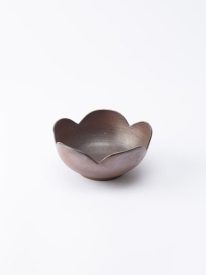 Flower-Shaped Medium Bowl
 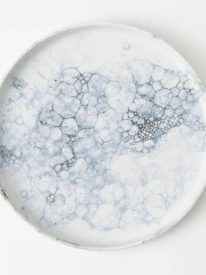 Ecume Dinner Plate 9.6 in
 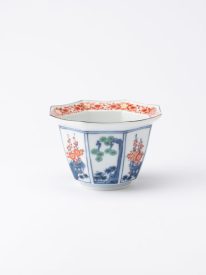 Kakiemon Octagonal Kobachi Small Bowl
 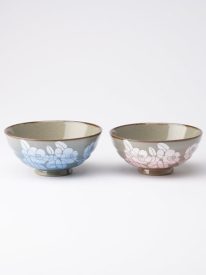 Ginsai Sasanqua Kutani Japanese Rice Bowl Pair
 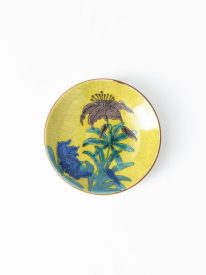 Lily Sauce Plate
 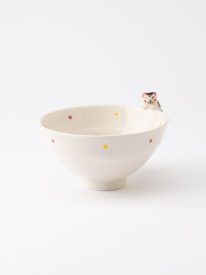 Kikusho Kiln Red Dot Cat Hasami Japanese Rice Bowl
 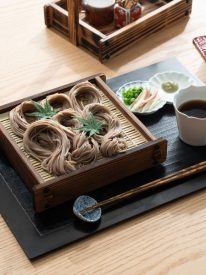 Miyabi Urushi Nezuko Kiso Woodwork Japanese Soba Tray