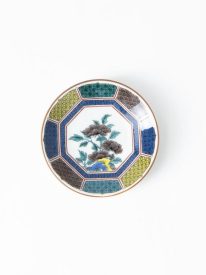
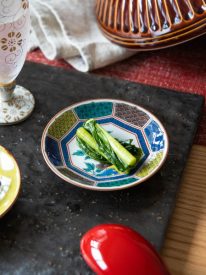
This sauce plates feature red peonies and traditional patterns around them, painted in four of the five colors of the ko-Kutani style: green, yellow, purple, and dark blue. This versatile plate is perfect for various occasions, from everyday meals to tea time. It’s ideal for serving small foods such as cheese, nuts, and condiments. For…
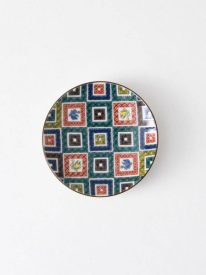
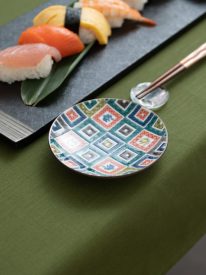
This Japanese sauce plate features Japanese traditional tile patterns. Kutani ware uses a brush for painting with Japanese coloring paint, as you can see the painted part is slightly thickened. Perfect size as a sauce plate. It is also versatile to serve cheese, nuts, condiments, and other small food. You may also put a small…
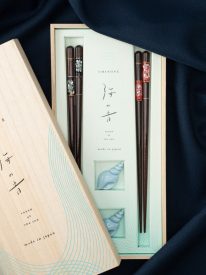
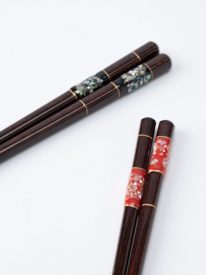
These chopsticks from Matsukan’s Sound of the Sea series are crafted using the raden technique, where intricate cuts of mother-of-pearl are embedded into the lacquer. Lightweight and easy to hold, their tips are finished with a non-slip surface. The chopstick rests are made with a seashell-shaped mold originally used for rakugan, a traditional Japanese confectionery. The…
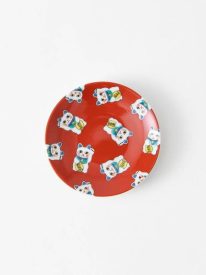
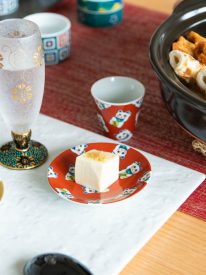
This sauce plate features the iconic lucky cat on a vibrant red background. Inspired by Aoki Mokubei, the plate is decorated in the Mokubei style of Kutani ware, where intricate designs in the traditional five Kutani colors are elegantly set against a rich red base. Today, lucky cats are well-known symbols of wealth and good…
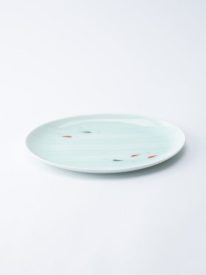
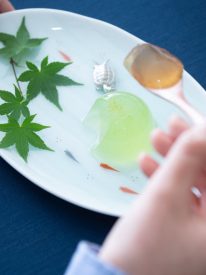
Enjoy the refined natural blue-green luster of celadon with this stylish oval plate from Kosen Kiln. With its translucent glaze on the blue-jade hue of celadon, a peaceful atmosphere emanates from the plate’s surface, like a calm glistening pond. An air of tranquility is furthered by the horizontal lines that grace this plate. Also adorning the…
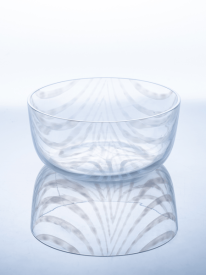
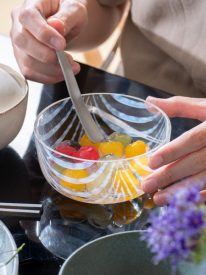
This is a glass bowl with makiage pattern from the Taisho Roman glass series by Hirota Glass, a long-established glass manufacturer in Tokyo. Makiage is a traditional tie-dyeing technique used in kimono making. This method creates intricate patterns that convey an aura of elegance and grace. This pattern is created by the aburidashi “invisible ink” technique,…
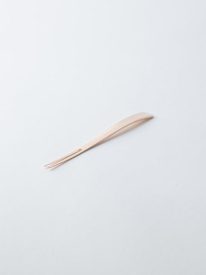
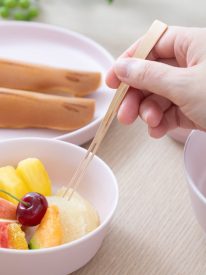
Introducing the fruit fork from the “URBAN” series, which harmonizes effortlessly with any type of dishware. It is produced in Tsubame-Sanjo, a region that accounts for 90% of metal utensil production in Japan. The entire fork is designed with a supple curve that resembles the flow of water. This curvature seems to comfortably adapt to your…
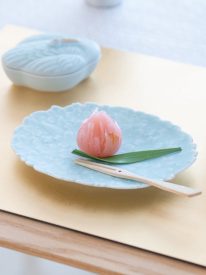
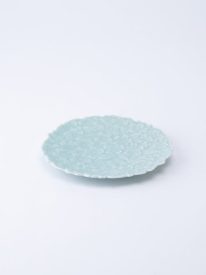
The graceful matte celadon texture of this sakura, or cherry blossom, side plate conveys tenderness the moment you touch it. Cherry blossoms are delicately engraved with varying depths, creating a harmonious interplay of deep and shallow patterns, beautifully enhanced by the magnificent shading of the celadon porcelain. It is perfect as an additional plate for…
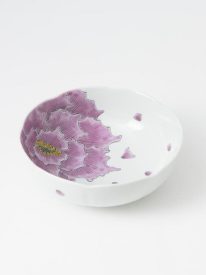
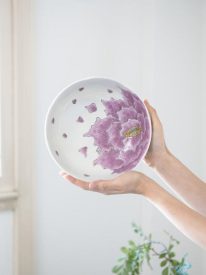
The large bowl features a beautiful pink peony, hand-painted by artist Fukuda Yoshinori. A large peony is designed to fit the round bowl, with scattered petals drawn around it and on the outside of the bowl. Rooted in the rich tradition of Kutani ware, Fukuda Yoshinori brings his mastery of akae, Yoshidaya, and ko-kutani styles…
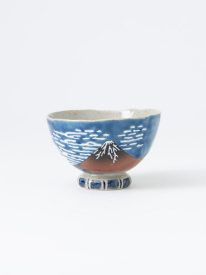
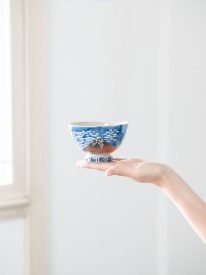
This bowl features Red Fuji, capturing the moment of the rising sun turning Mount Fuji red in a clear early morning. Each piece is handcrafted by an artisan of Kutani ware. It is painted with Japanese color paints using a brush, as you can see the painted part is slightly thickened. With the combination of…
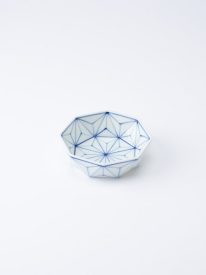
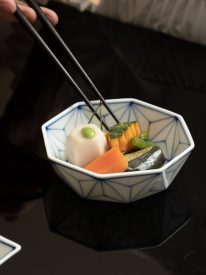
This Kobachi bowl features the traditional Japanese hemp leaf pattern. The hemp leaf is considered as a symbol of good luck meant to ward off evil and is commonly used on kimono and tableware. Employing a technique of “Sometsuke” (underglaze cobalt blue) painting on a base brilliantly fired to a pure white, each piece is…
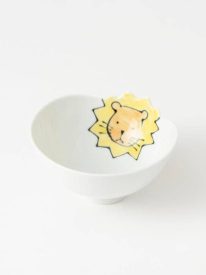
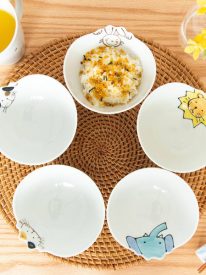
This unique rice bowl has a lion’s face on the inside and the whole body and butterflies on the outside. The rim is designed to follow the lion’s mane. The bright yellow color, with shades of watercolor, retains the warmth of hand-painting. With its humorous design and easy to use size, it is recommended for…

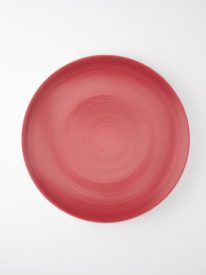 Japan Autumn Red Dinner Plate 11.7 in
 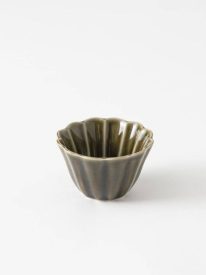 Kikuwari Khaki Kobachi Small Bowl 3in