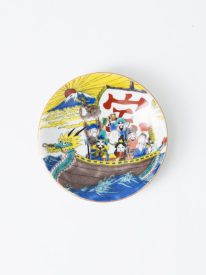
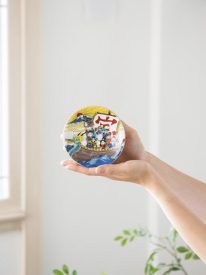
This sauce plate is decorated with a design of the Seven Lucky Gods on a treasure, which is believed to bring many blessings. It is perfect for celebrating special occasions and show your gratitude to others. It is an ideal plate for serving sauces or snacks like nuts and candies. Or you may serve a…
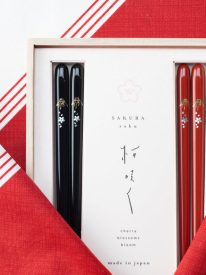
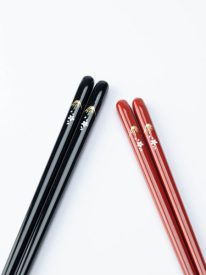
Embrace the refined artistry of Matsukan with these chopsticks, adorned with the design of the iconic Mt. Fuji and cherry blossoms, or sakura in Japanese. The striking contrast of black and deep red provides a dramatic canvas and showcases Japan’s renowned peak in a delicate and impactful manner. The intricately drawn cherry blossoms on the…
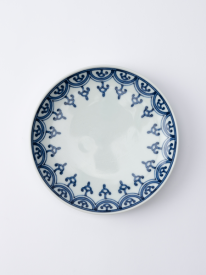
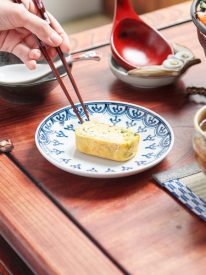
This round side plate is crafted by Takayama Toki, a renowned maker of Hasami porcelain, and dyed with seitan, a kind of indigo. It features a finely detailed yoraku design along the rim, an intricate pattern that originates from luxurious ancient Indian necklaces and ornaments. Traditionally, this pattern has been cherished as an auspicious symbol…
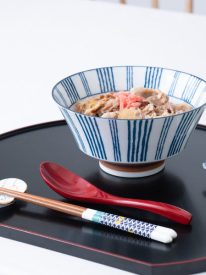
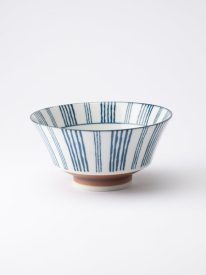
This regular-sized Japanese ramen bowl showcases a timeless blue-striped pattern that enhances a variety of table settings. Its sleek, straight silhouette offers a contemporary aesthetic, making it a standout choice among ramen bowls. With their irregular hand-painted touch, the vertical stripes follow the beautifully flared shape of the bowl accentuating the overall design. The inner…
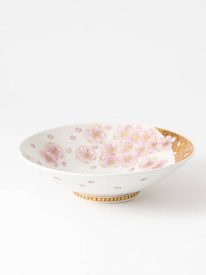
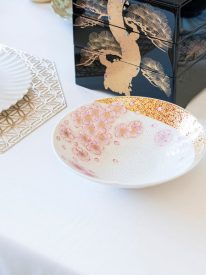
This beautiful plate is decorated with a cherry blossom pattern, handcrafted by an artisan of Kutani ware, Mr. Yoshinori Fukuda, who specializes in golden decoration known as “Kinrande”(literally “gold brocade”). It is a perfect size for serving side dishes such as Sunomono(vinegared food), Aemono(seasoned and sauced food), and Nimono(simmered food, or snacks like nuts and…
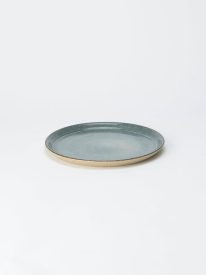
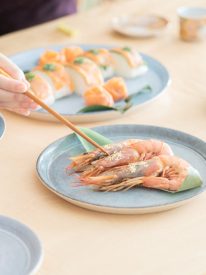
This versatile plate beautifully features the natural textures and hues of Shigaraki pottery. It’s offered by Homeland, a brand dedicated to providing kitchen items that become cherished tools in everyday life, and crafted in collaboration with Hissan Pottery, a renowned Shigaraki ware kiln. The delicate variations of blue in aohagifrom the soft light of a…
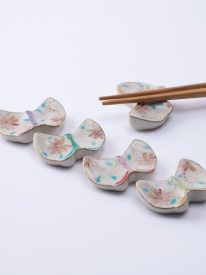
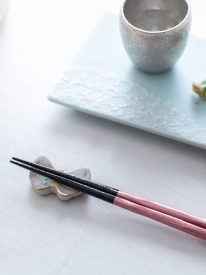
Take your dining table to the next level with these ornate butterfly-shaped Kyo ware chopstick rests. Hand-painted in beautiful, delicate hues and designs, they add an elegant touch to any setting. The rim is decorated with gold, adding a subtle accent. With its smooth surface, ceramic chopstick rests are the go-to material for daily use. Not…
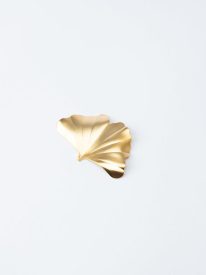
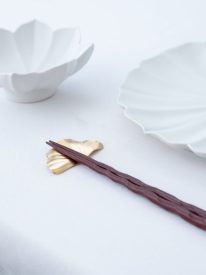
This is a stainless steel chopstick rest in the shape of a ginkgo leaf in gold. It is made in Tsubame Sanjo, which accounts for 90 percent of domestic production of metal tableware.It expresses the soft thinness, undulation, and curves of a ginkgo leaf, and is designed by Kaichiro Yamada, KAICHI DESIGN, which has won…
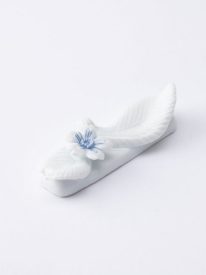
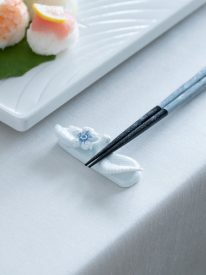
Decorated with a graceful sakura, the iconic Japanese cherry blossom symbolizing renewal and fleeting beauty, and its flowing leaves, this chopstick rest exudes refined elegance. Crafted from Amakusa ceramic stone from Kumamoto Prefecture, this piece is celebrated for its translucent whiteness and soft, pearly texture, capturing the beauty and purity of Japanese ceramics. The cherry…
These chopsticks are stunning, featuring a geometric pattern of neatly aligned triangles engraved on white bamboo and finished with a sleek lacquer coating. The intricate triangular design brings a contemporary flair to the traditional craftsmanship. Bamboo chopsticks are moderately light and very easy to hold. Their flexibility and thin tips make eating effortless and precise….
This plate has a warm texture of stoneware and lovely hand-painted sakura (cherry blossoms), which symbolizes inner beauty, elegance and good education in Japan. Crafted in a versatile size, it is suitable for serving appetizers, salads, and desserts. It is made by Kokuzou Kiln, known for its gentle and warm stoneware, and features beautiful watercolor-like painting and…
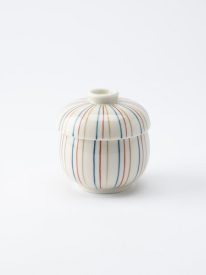
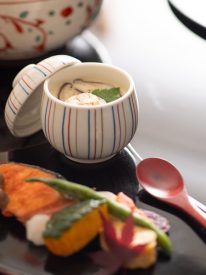
Enjoy delicious chawanmushi, Japanese steamed egg custard, in this beautiful Arita ware chawanmushi bowl. This Chawanmushi bowl is painted in the “Tokusa (Horsetail)” pattern which is a classic motif that has been beloved since the Edo period (1603 CE – 1867 CE). Its straight-growing appearance symbolizes wishes for growth and prosperity. And the three subdued colors…

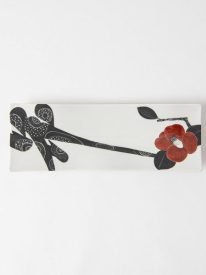 Red Camellia Kutani Rectangle Plate
 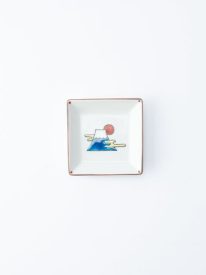 Blue Mt. Fuji Square Sauce Plate