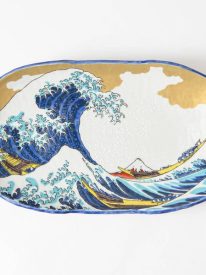
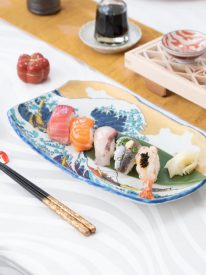
This beautiful platter features the Japanese artist Katsushika Hokusai’s ukiyo-e The Great Wave, which depicts surging waves and three boats, and silently standing Mount Fuji in the distant background. Throughout his life, Hokusai depicted waves as the main subject of his artwork along with Mount Fuji. Hokusai’s expression of the ever-changing movement of water captures…
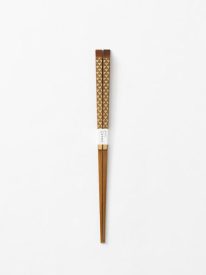
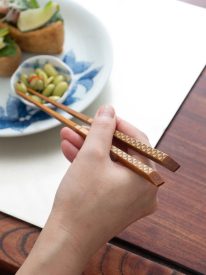
These chopsticks are stunning, featuring a geometric pattern of neatly aligned triangles engraved on white bamboo and finished with a sleek lacquer coating. The intricate triangular design brings a contemporary flair to the traditional craftsmanship. Bamboo chopsticks are moderately light and very easy to hold. Their flexibility and thin tips make eating effortless and precise….
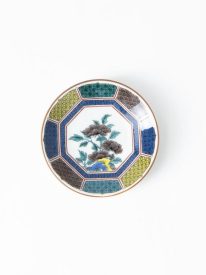
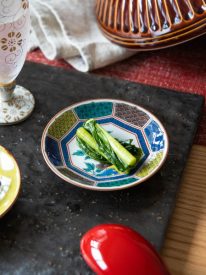
This sauce plates feature red peonies and traditional patterns around them, painted in four of the five colors of the ko-Kutani style: green, yellow, purple, and dark blue. This versatile plate is perfect for various occasions, from everyday meals to tea time. It’s ideal for serving small foods such as cheese, nuts, and condiments. For…
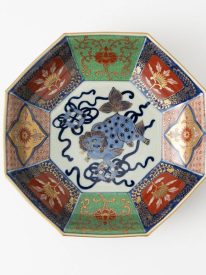
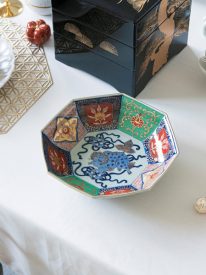
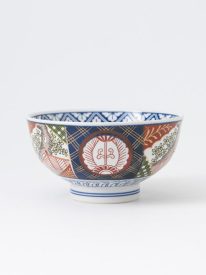
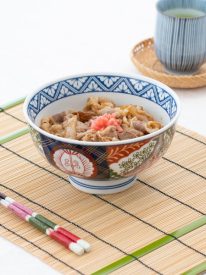
The gorgeous bowl features a lion and peony with a modern interpretation of the traditional classic patterns of old Imari. In Japanese arts, the combination of splendid peony and the imposing tiger is often depicted as regarded as a symbol of bravery and wealth. This gorgeous pattern, expressed by the colorful colors using gold is…
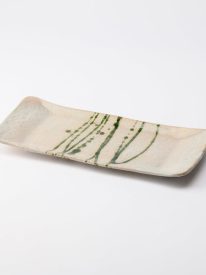
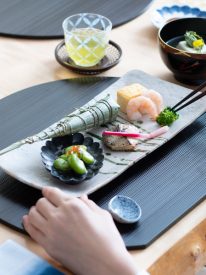
This long plate features a light grayish hue and an elegant abstract motif of water plants, a hallmark of Yashichida Oribe ware, characterized by its green glaze and abstract brushstrokes. The expressive green design extends onto the bottom of the plate, where Tsujii has created a repeating pattern with his fingertips. Drawing inspiration from nature,…
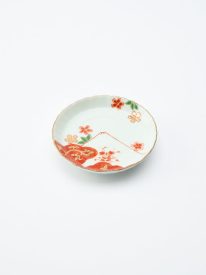
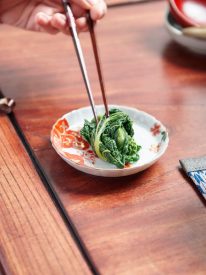
This sauce plate features refined sakura motifs alongside an iconic depiction of Mount Fuji which are iconic symbol of Japan, infusing your dining table with a distinctive touch of Japanese elegance. This plate features an 8 cm (3.1 in) flat center framed by a sharply contoured 1 cm (0.4 in) rim. The plate’s size is…
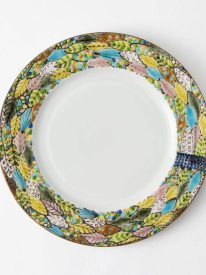
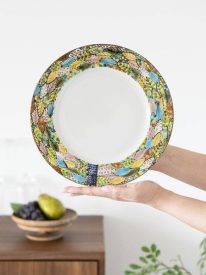
This beautiful dinner plate is part of the Hamorebi series, meaning “sunlight filtering through leaves.” The delicate painting along the rim is hand-painted by female artisan Sakurai Chie. Each piece is carefully adorned using traditional Japanese color paints, a distinctive feature of Kutani ware. The painted areas are slightly raised, adding texture and depth to…
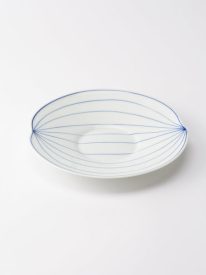
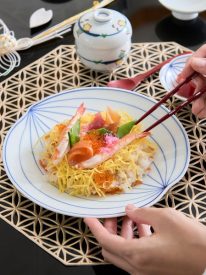
On this large white porcelain plate, lines in sometsuke “Blue and White” style form smooth and elegant curves, representing leaf veins. These lines are hand-painted by artisans, with subtle variations in thickness and shade making each unique. When using this plate, you can feel a closeness to nature. Sometsuke is a technique that applies indigo color…
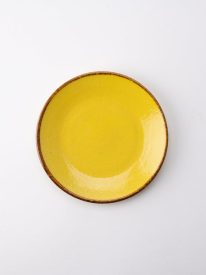
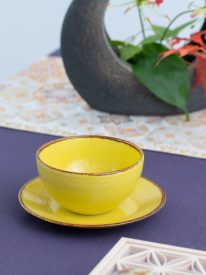
This yellow stoneware side plate is eye-catching. The bumpy surface is unique to stoneware which has a rustic, warm, and chunky texture. The brown glazed rim enhances the vividness of the yellow color. The D17cm(6.7in) size is ideal as an extra plate and is ideal for desserts, breads and fruits. Flamenco is a series born from…
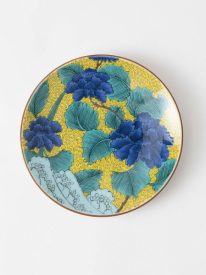
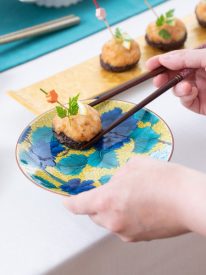
This side plate features large blue peonies elegantly painted against a yellow background. This is a classic design of the ko-Kutani (old Kutani) style dating back to mid-17th century, depicting the nature-themed daring design and distinctive bright colors of Kutani ware. With a diameter of 15 cm (5.9 in), it is perfect as an extra…
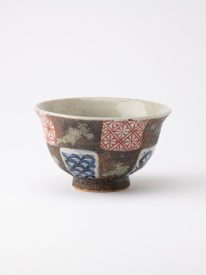
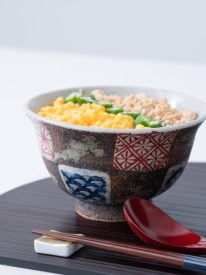
This regular-sized donburi bowl features a charming checkered pattern over an unglazed rustic brown background. Adorned with various traditional designs like the asanoha “hemp leaf” pattern and seigaiha “wave” pattern, each symbolizes continuity and prosperity, carrying the auspicious wish that good fortune will last forever. Its depth helps retain the food’s warmth while adding a…
This regular-sized Japanese donburi rice bowl features sakura, or cherry blossoms, framed by dark blue, lattice-like patterns, all rendered in the traditional nishiki-e style. Nishiki-e, meaning “brocade picture,” is a multi-colored woodblock print technique that revolutionized ukiyo-e during the Edo period (1603-1868 CE), when most prints were in black and white. The bowl is perfect…

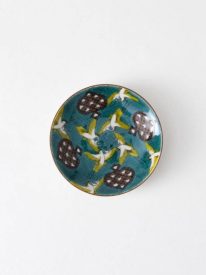 Dancing Cranes Sauce Plate
 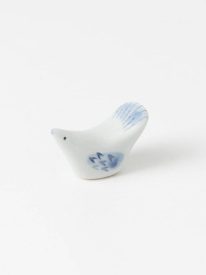 Small Bird Chopstick Rest