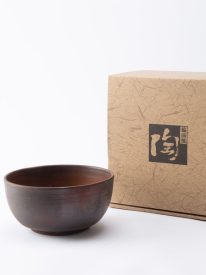
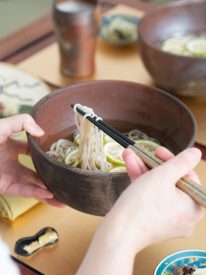
This large donburi bowl embodies the earthy textures and natural colors typical of Bizen ware. Its rough surface and stunning patterns, created by the kiln’s flames, highlight the “art of clay and fire.” The unglazed red clay, adorned with natural ash markings, offers a rugged, metallic feel. Bizen ware, one of Japan’s oldest ceramics, is…
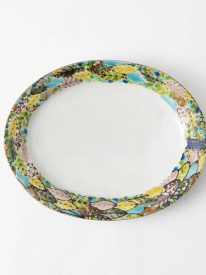
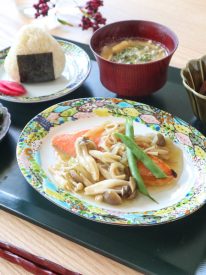
This beautiful Japanese oval plate from the Hamorebi seriesmeaning “sunlight filtering through leaves”is hand-painted by female artisan Sakurai Chie. Each piece is meticulously brushed using traditional Japanese color paints, a distinctive feature of Kutani ware. The painted areas are slightly raised, adding texture and depth to the design. The elegant oval shape offers a distinctive…
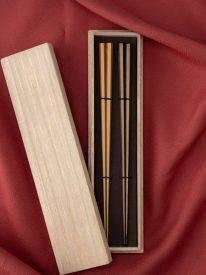
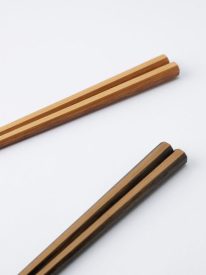
This set of bamboo chopsticks showcases the beauty of intricately crafted shiratake bamboo from Kyoto. An evergreen that grows quickly and straight, bamboo symbolizes prosperity in Japanese culture. Enjoy their rustic natural charm in two subtle shades of brown. Sourced from Muko City in Kyoto Prefecture, a region famed for its bamboo, the area’s unique…
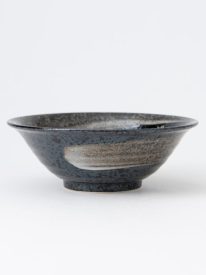
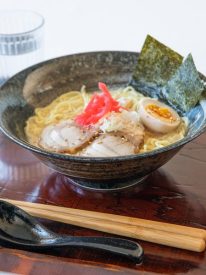
Imbued with a dark elegance, this regular-sized ramen bowl adds a refined, upscale touch to any meal. The glossy black glaze, accented with a subtle metallic iridescence, serves as the perfect canvas for bold, impressionistic brushstrokes in brown and white, creating a striking visual statement. Crafted on a potter’s wheel, the bowl has a satisfying…
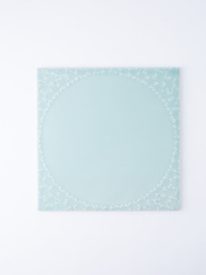
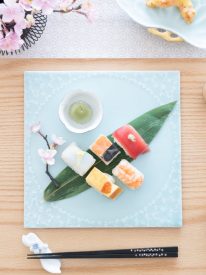
This square plate features a stunning sakura, or cherry blossom, carving that beautifully frames any dish placed on it, adding elegance to your dining table. Simply setting it at the center creates a striking focal point that enhances the entire space. The gentle, matte celadon finish offers a soft, inviting feel the moment you touch it.Its…
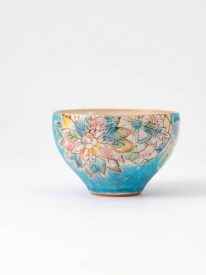
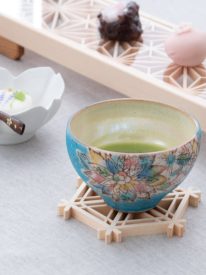
This kobachi small bowl features a vibrant turquoise glaze, with floral patterns in shades of blue, green, yellow, and pink decorating its surface. The delicate hand-painted details and subtle kannyu crackles add depth and texture, creating a design reminiscent of flowers blooming along a water’s edge. The interior is finished with a luxurious champagne gold glaze,…
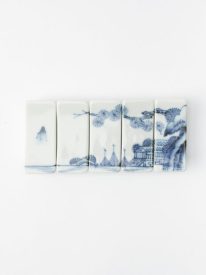
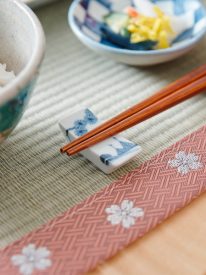
This set of five chopstick rests comes together to form a single, cohesive design. When arranged in order, they reveal rokaku sansui motifa signature Kutani Choemon design depicting a palace and landscape. Traditional craftsmanship is paired with a playful touch, adding a bit of charm and sparking conversation at the table. Perfect for daily use,…
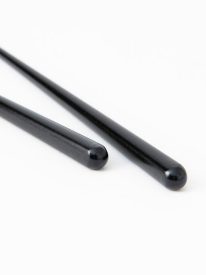
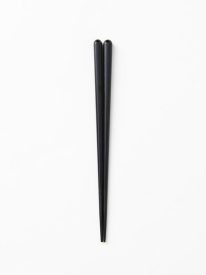
These sturdy chopsticks have a simple design with non-slip tips for added convenience. The rounded top ends give them a soft and modern look, while the wood grains subtly show through the chic black finish. Measuring 23.5 cm (9.3 in) long, they are comfortable to use and stable, even for larger hands. The chic color…
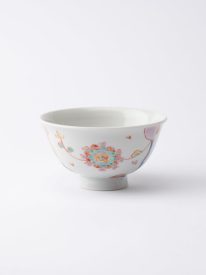
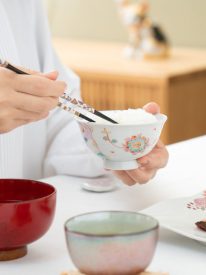
This rice bowl features flower shaped balloon delicately painted by artisans of Ginshu Kiln, which is especially known as its romantic and playful pastel colored painting. The painted areas have a slightly raised texture, a characteristic of Kutani ware, which is traditionally hand-painted using Japanese coloring pigments and a brush. With a diameter of 10.5 cm(4.1…
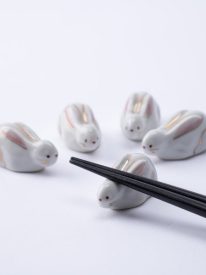
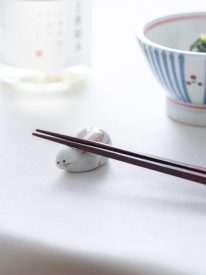
This adorable rabbit chopstick rest is made by Hozan kiln from Kyo ware. The cherry blossom painted on the tail is a charming accent. The silhouette of the rabbit and the golden lines are beautiful, making this chopstick rest not only cute but also a perfect match for a sophisticated dining table. With its smooth…
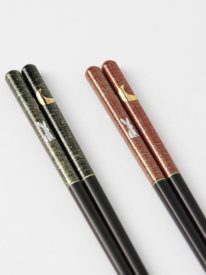
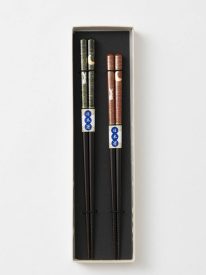
This exquisite set of Japanese chopsticks features a charming rabbit sitting under a crescent moon. The gold moon, silver rabbit and gold powder in the background lend a touch of fine elegance to the motif. The pairing of a rabbit and moon has been beloved in Japan for ages. According to Japanese folklore, the moon’s…
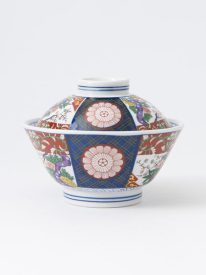
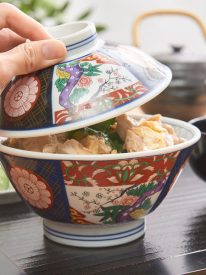
This small-sized Japanese donburi rice bowl features peonies, framed by dark blue, lattice-like patterns, all rendered in the traditional nishiki-e style. Nishiki-e, meaning “brocade picture,” is a multi-colored woodblock print technique that revolutionized ukiyo-e during the Edo period (1603-1868 CE), when most prints were in black and white. The lid helps keep the food warm and…

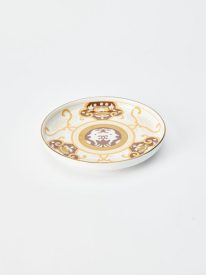 Japan Autumn Gold Old Imari Side Plate
 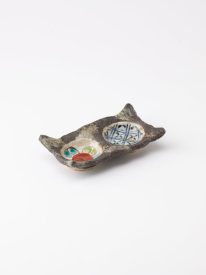 Kousai Kiln Camelia Hasami Divided Sauce Plate