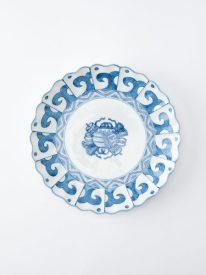
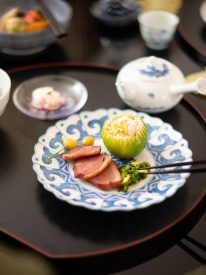
This side plate is a magnificent example of the artistry found in Mikawachi ware, featuring hand-painted designs in blue on fine, durable porcelain. The rim of the plate is adorned with the geometric patterns of shonzui-de waves, a style influenced by the porcelain patterns originally produced in Jingdezhen kilns during the late Ming Dynasty. At…
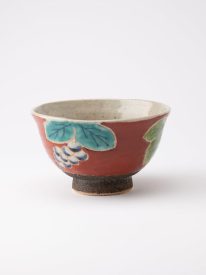
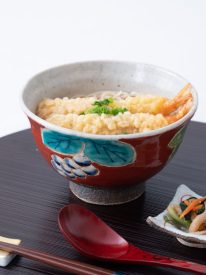
This regular-sized donburi bowl features a deep color scheme of dark red and vibrant green with a charming design of grapes and grape leaves. It showcases the striking kannyu texture, in which delicate, crack-like crazing patterns are formed beneath the glaze. Its depth and straight sides help retain the food’s warmth while adding a touch…
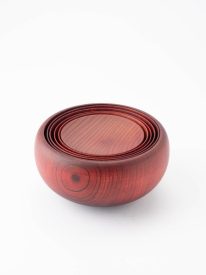
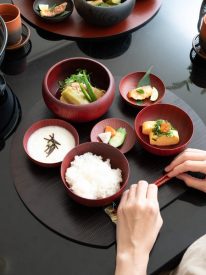
Oryoki is a functional set of bowls inspired by Zen Buddhist principles, designed to minimize waste with a functional, minimalist style that suits modern tables. The set stacks perfectly, with smaller bowls nesting neatly inside the largest, ensuring easy storage and portability. This compact design allows even a six-layer set to be stored effortlessly, making…
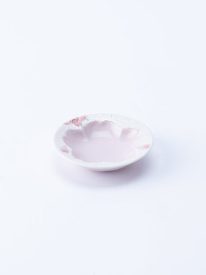
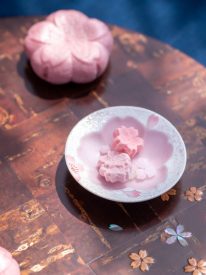
This small sauce plate boasts a soft pink hue, its edges adorned with a lustrous glaze that casts a splendid, colorful glow. The center of the plate features a sakura, cherry blossom, design with the rims decorated with pink gradient flowers and petals. It is perfectly suited for use as a sauce plate and equally…
This nature-themed side plate is part of the Hamorebi series, meaning “sunlight filtering through leaves.” Each piece is beautifully hand-painted by female artisan Sakurai Chie. Using traditional Japanese coloring paintsa hallmark of Kutani warethe painted areas have a slightly raised texture, adding depth and character to the design. Perfect for serving small desserts, fruits, or…
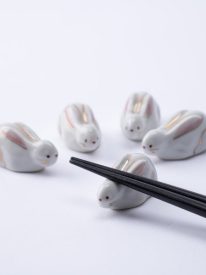
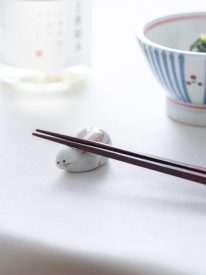
This adorable rabbit chopstick rest is made by Hozan kiln from Kyo ware. The cherry blossom painted on the tail is a charming accent. The silhouette of the rabbit and the golden lines are beautiful, making this chopstick rest not only cute but also a perfect match for a sophisticated dining table. With its smooth…
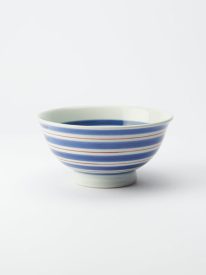
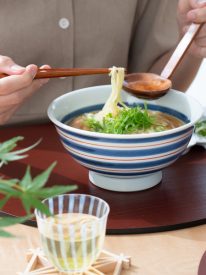
Thick blue and fine red lines alternate around the whole exterior of snow-white porcelain of this donburi bowl. The blue lines are drawn using the traditional gosu pigment, while the red accents enhance the design. The hand-painted blue patterns are made using the tsuketate technique, where each stroke is applied without outlines. This gives the bowl…
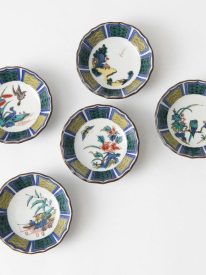
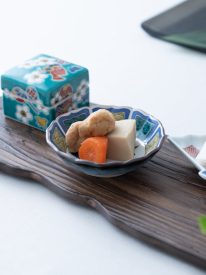
This kobachi small bowl set features traditional Japanese house, nature and scenery in Ko-Kutani (old Kutani) style, one of the remarkable painting styles of Kutani ware. Perfect size as a sauce plate. It is also versatile to serve cheese, nuts, condiments, and other small food. Put a small portion of food or relishes in, place…
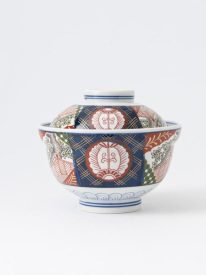
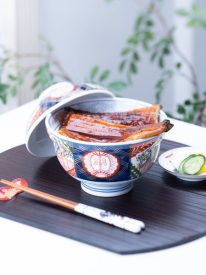
This large-sized Japanese donburi rice bowl features sakura, or cherry blossoms, framed by dark blue, lattice-like patterns, all rendered in the traditional nishiki-e style. Nishiki-e, meaning “brocade picture,” is a multi-colored woodblock print technique that revolutionized ukiyo-e during the Edo period (1603 CE-1868 CE), when most prints were in black and white. The lid helps keep…
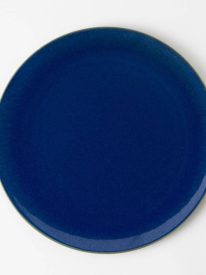
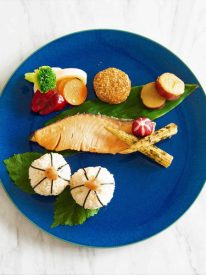
This dinner plate in a shiny dark blue color has an exquisite silhouette with wide rims and and a beautiful curve. As well as its excellent design, it is durable and easy to use which makes it is widely used in restaurants in Japan and overseas. The size is great for serving a salad, appetizers,…
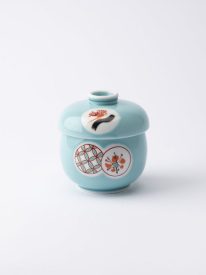
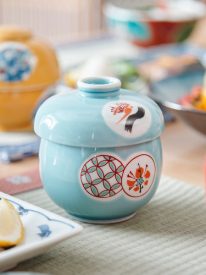
This chawanmushi (Japanese steamed egg custard) bowl has a traditional circle pattern called marumon. The transparent blue-green color unique to celadon porcelain is beautiful and contrasts elegantly with the red circle pattern. Tasei Kiln is a kiln that originally made chawanmushi bowls for restaurant use. If you make chawanmushi with it, you can enjoy authentic…
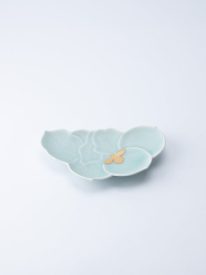
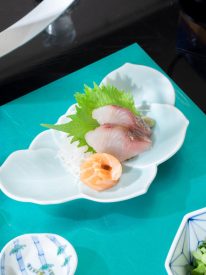
The graceful matte celadon texture of this persimmon-shaped plate conveys tenderness the moment you touch it. Accented with gold, the combination with the pale blue is graceful and sophisticated. The persimmon is a familiar fall delicacy that has been cultivated throughout Japan since ancient times because it is suited to the Japanese climate. With its…

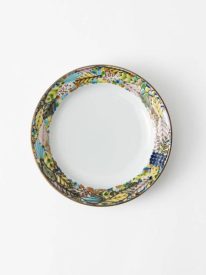
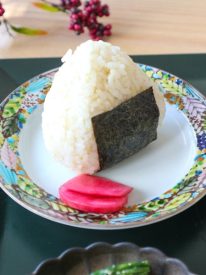
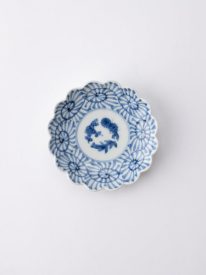 Arabesque Chrysanthemum-Shaped Sauce Plate
 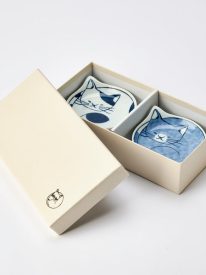 Coneco Cat Sauce Plate Set
 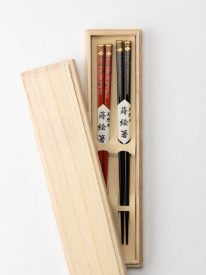 Pine, Bamboo and Plum Chopsticks Pair Set
 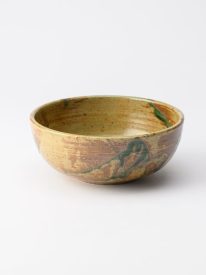 Brown Water Plant Serving Bowl