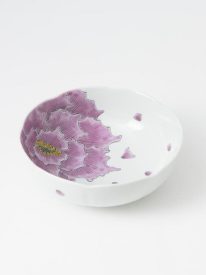
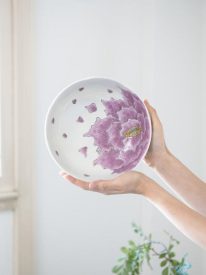
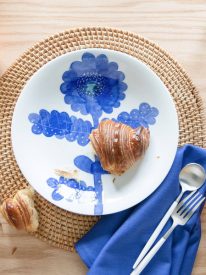
The large bowl features a beautiful pink peony, hand-painted by artist Fukuda Yoshinori. A large peony is designed to fit the round bowl, with scattered petals drawn around it and on the outside of the bowl. Rooted in the rich tradition of Kutani ware, Fukuda Yoshinori brings his mastery of akae, Yoshidaya, and ko-kutani styles…
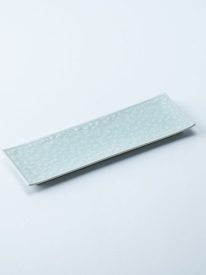
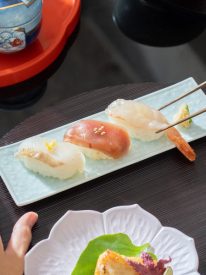
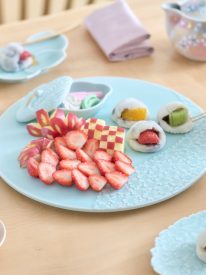
This exquisite side plate features an arabesque pattern. Perfect for presenting side dishes or small sweets, its celadon glaze showcases a gradient of light blue. The subtle textures and intricate patterns on the surface add a touch of sophistication, beautifully enhancing the presentation of the food. Encased in a navy blue paper box, this piece…
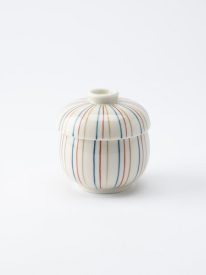
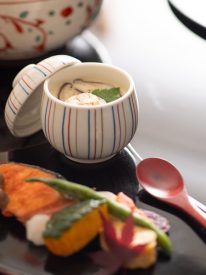
Enjoy delicious chawanmushi, Japanese steamed egg custard, in this beautiful Arita ware chawanmushi bowl. This Chawanmushi bowl is painted in the “Tokusa (Horsetail)” pattern which is a classic motif that has been beloved since the Edo period (1603 CE – 1867 CE). Its straight-growing appearance symbolizes wishes for growth and prosperity. And the three subdued colors…
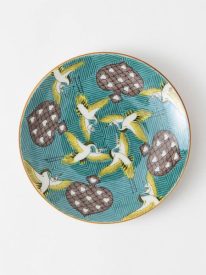
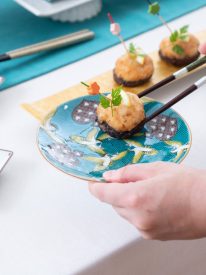
A sauce plate features flying Japanese cranes as if they are dancing. Kutani ware uses a brush for painting with Japanese coloring paint, as you can see the painted bird is slightly thickened and standing out. The crane is known to be a symbol of longevity and prosperity. The size is great as an extra plate….
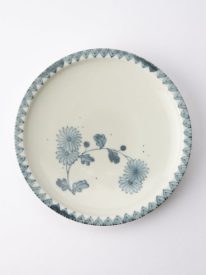
This is a Arita ware plate by Ri Sanpei (Yi Sam-pyeong) Kiln, a brand by the descendant of Yi Sam-Pyeong, the discoverer of white porcelain ore for Arita ware. This dish is simple, yet dignified and powerful. This design itself is from the early Imari period, about 400 years ago. Chrysanthemums are characterized not only by their beauty…
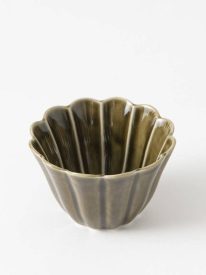
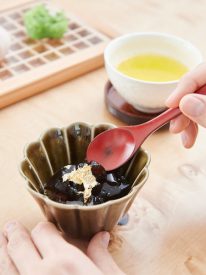
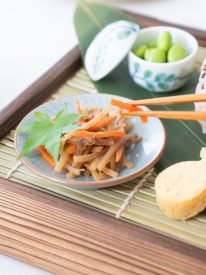
This kobachi small bowl features a chrysanthemum shape and the glossy khaki colored glaze, which enhances the fresh and delicious appearance of the served food. The size is perfect as kobachi to serve any side dish, such as sunomono(vinegared food) , aemono(seasoned or sauced food) and nimono(simmered food) individually.
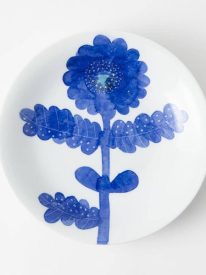
This beautiful round plate features blue flowers as if painted with watercolors. The bright design resembles blooming flowers, bringing a joyful atmosphere to the table. It is painted by the female artist, Alyne Ohigashi, who was born in the Philippines. She uses a unique technique called washi-zome (Japanese paper dyeing) and continues her ideal stoneware-making in…
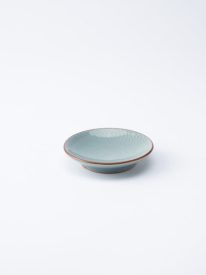
Celadon often being used in large porcelain for artistic purposes, but this is a charming sauce plate that can fit in your palm. The rim exposes the outlines of the red clay, an exquisite balance between the elegance of emerald celadon and the rustic red soil. The base is of brown color and unglazed, once held in…
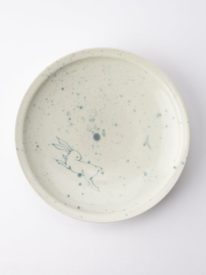
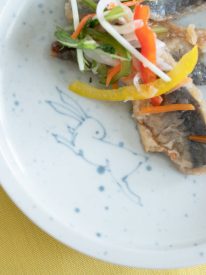
This is a Arita ware plate by Ri Sanpei (Yi Sam-pyeong) Kiln, a brand by the descendant of Yi Sam-Pyeong. The plate is represented as the moon, with a rabbit hopping around on top of the crater-like spots painted on it. This design is created by using a paper pattern in the shape of a rabbit and…
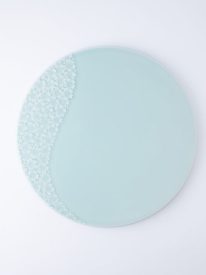
This round dinner plate features a stunning sakura, or cherry blossom, carving that beautifully frames any dish placed on it, adding elegance to your dining table. Simply setting it at the center creates a striking focal point that enhances the entire space. The gentle, matte celadon finish offers a soft, inviting feel the moment you…
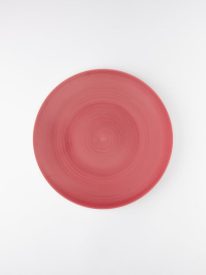
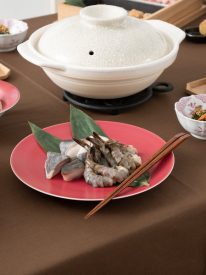
This beautiful red dinner plate, with its artisan brushed texture, gives it a sense of dignity and complements all kinds of dishes. It can be used as a main plate for any types of dish. Appetizers, salad, main dish are the perfect match. The gorgeous colors make it a great choice for layering with plates…
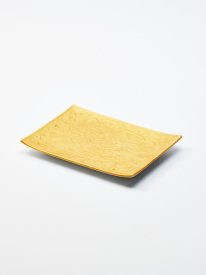
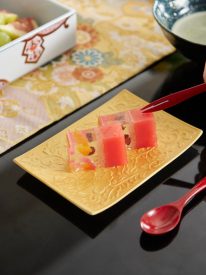
With its delicate, almost lace-like monochromatic elegance, this gold-colored plate is a unique take on a floral pattern from a dyeing technique originally imported to Japan from India. Sarasa, better known in the West as chintz or calico, is presented here in a luxurious and sophisticated style. Sarasa patterns were seen in dyed cotton textiles…