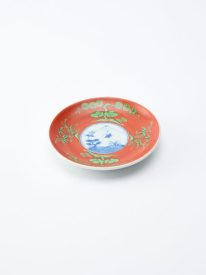
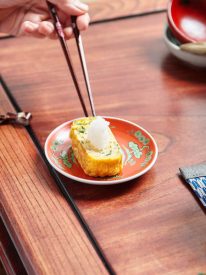
This sauce plate features a refined pine, bamboo, and plum motif alongside an iconic depiction of Mount Fuji. In Japanese culture, pine, bamboo, and plum are regarded as auspicious symbols that herald both good fortune and longevity The technique displayed in this plate is called somenishiki where the plate is first glazed with white and…
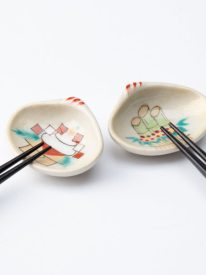
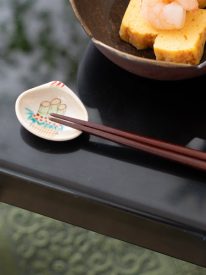
This set of chopstick rests are designed in the shape of shells, featuring a kadomatsu and kagami mochi motif. Kadomatsu, the decorative pine trees for New Year, and kagami mochi are traditional Japanese symbols used to welcome the New Year and to honor the gods. It is believed that Toshigami, a Japanese deity representing vitality, dwells…
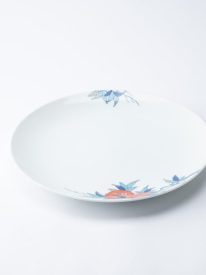
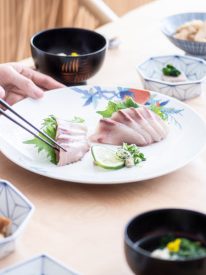
This plate has a beautiful pomegranate design in the iro-Nabeshima (colored Nabeshima) style on stunning white porcelain. The pomegranate pattern is one of the most representative patterns of Nabeshima ware. As bright orange-red flowers bloom in early summer, the pomegranate fruit ripens in autumn, its thick outer skin breaking open to reveal numerous seeds inside….
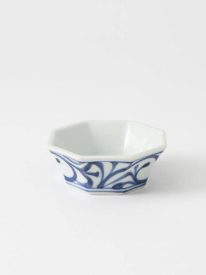
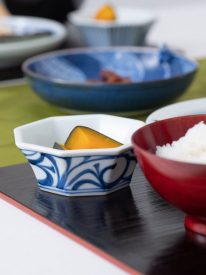
This octagonal kobachi small bowl features a hand-painted arabesque pattern, a representative motif of Tobe ware. The deep indigo shade adds a hint of modern elegance. Perfect for serving small portions of side dishes like tangy sunomono or simmered nimono, it’s also suited for a scoop of ice cream or fresh fruit. The octagonal rim…
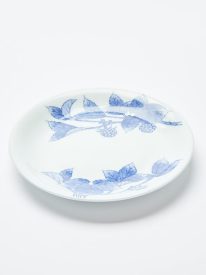
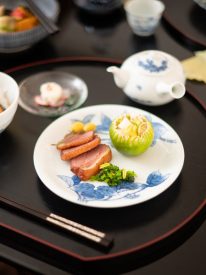
The harmony between white porcelain and blue paintings is the beauty of this Mikawachi ware plate. Two raspberry branches painted in flowing, fine lines are superbly composed, and the small round raspberry berries gracefully match the sharpness of the leaves and branches. The shades of blue display an exquisite gradation, painted carefully by skilled craftspeople using…
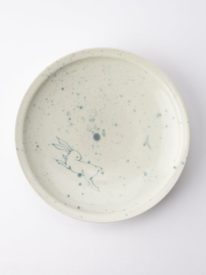
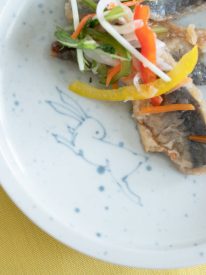
This is a Arita ware plate by Ri Sanpei (Yi Sam-pyeong) Kiln, a brand by the descendant of Yi Sam-Pyeong. The plate is represented as the moon, with a rabbit hopping around on top of the crater-like spots painted on it. This design is created by using a paper pattern in the shape of a rabbit and…
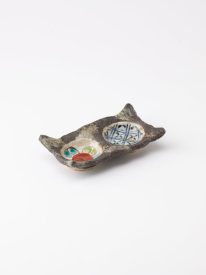
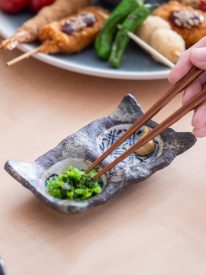
This sauce plate has a camellia motif painted on a “yakishime” base, which is unglazed pottery fired at a high temperature. It is an eye-catching piece on the table with a rustic and warm atmosphere that brings out the best of hand-drawn lines and handmade shapes.There are two places to put sauces and condiments, which is…
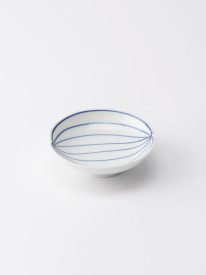
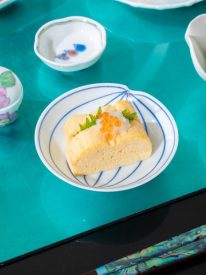
On this white porcelain sauce plate, lines in sometsuke “Blue and White” style form smooth and elegant curves, representing leaf veins. These lines are hand-painted by artisans, with subtle variations in thickness and shade making each unique. When using this plate, you can feel a closeness to nature. Sometsuke is a technique that applies indigo color…
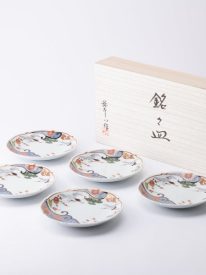
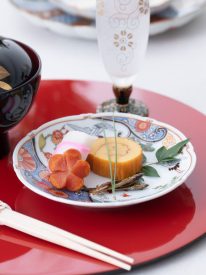
This set of five plates depicts a festive crane and waves. Decorated with other auspicious motifs such as pine, bamboo, plum, and chrysanthemum, it is perfect for celebrations and other occasions. These plates are beautifully decorated reflecting the high-quality craftsmanship handed down for generations within Arita Porcelain Lab’s long history. The technique displayed in this…
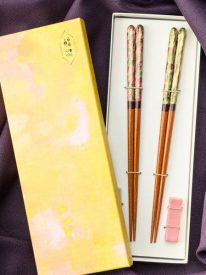
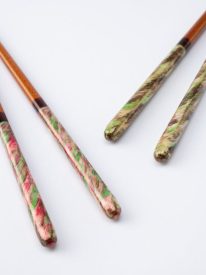
Beautifully hand-painted, these chopsticks from Matsukan’s Crystal series are a tribute to the vibrant colors of spring and summer. Inspired by komorebithe poetic Japanese term for sunlight filtering light through tree leaveseach pair is crafted with graceful brushwork and finished with a matte texture, expressing the serene dance of light and shadow within a lush forest….
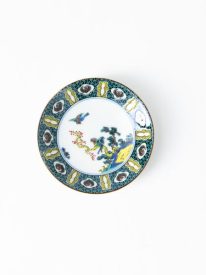
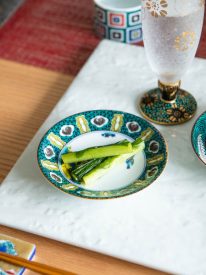
This sauce plate features a pine tree and bird drawn in the ko-Kutani style, one of the most traditional styles of Kutani ware. Perfectly sized as a sauce plate, it’s also versatile for serving cheese, nuts, condiments, and other small bites. For a more elegant presentation, you can serve small portions of food or relishes…
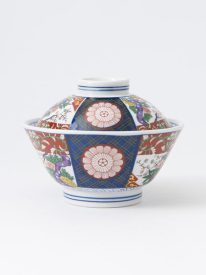
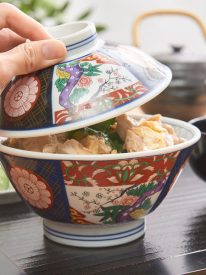
This small-sized Japanese donburi rice bowl features peonies, framed by dark blue, lattice-like patterns, all rendered in the traditional nishiki-e style. Nishiki-e, meaning “brocade picture,” is a multi-colored woodblock print technique that revolutionized ukiyo-e during the Edo period (1603-1868 CE), when most prints were in black and white. The lid helps keep the food warm and…

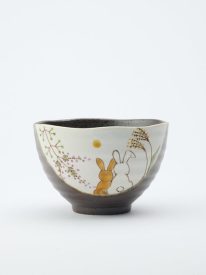 Rabbits in Sunny Spot Japanese Rice Bowl