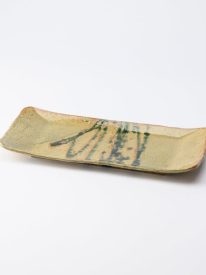
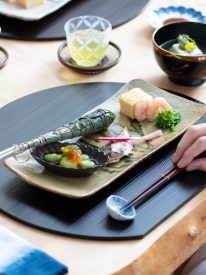
This long plate features a warm, earthy light brown color and an elegant abstract motif of water plants, which is a hallmark of Yashichida Oribe ware, characterized by its green glaze and abstract brushstrokes. The expressive green design extends onto the bottom of the plate, where Tsujii has created a repeating pattern with his fingertips….
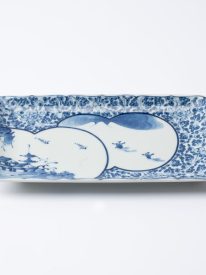
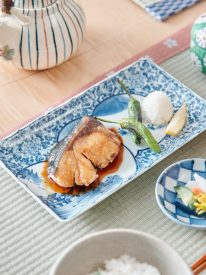
This rectangular dinner plate is crafted by Takayama, renowned for Hasami porcelain. Its surface features intricately detailed scenes of Japanese landscapesrolling mountains, winding rivers, boats, and templesneatly arranged within fan-shaped frames, all set against a background of abundant flowers. The result is reminiscent of a scroll painting, allowing you to appreciate its delicate and refined…
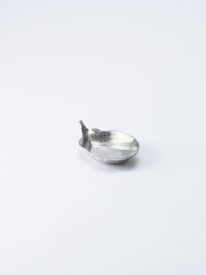
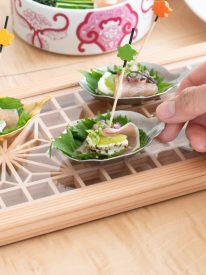
This silver amuse bouche spoon rests in the shape of a delicate persimmon leaf. It has a depth of 1.5cm(0.5in)perfect for carrying food without worries of spillage. The tapered base of the leaf is easy to hold and serves as a handle for the spoon. The veins of a persimmon leaf are recreated faithfully, a…
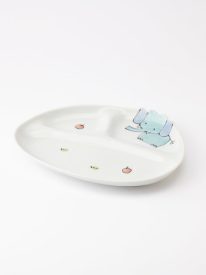
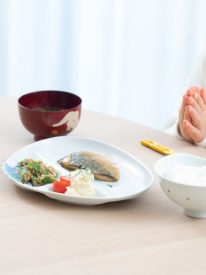
Serve meals to your little ones in this cute and well-designed children’s plate. Kids will love seeing the blue elephant peeking from the rim of the plate. The elephant’s ears are neatly shaped on the edges to give the plate a unique shape. The plate is divided into 3 sections. The bigger section can be…
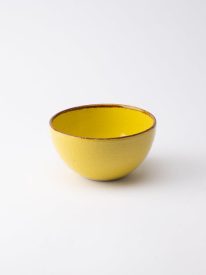
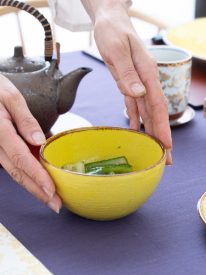
This beautiful yellow stoneware bowl is eye-catching. The bumpy surface is unique to stoneware which has a rustic, warm, and chunky texture. The brown glazed rim enhances the vividness of the yellow color. Measuring D12.3cm(4.8in), it is suitable for rice, fruit, soup, yogurt, etc. Flamenco is a series born from an exploration of “color”. The characteristic yellow…
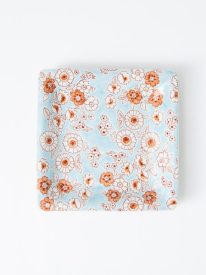
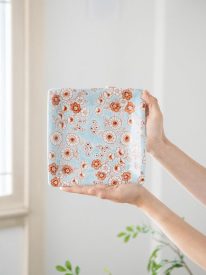
This small plate features a Japanese floral pattern. The area around the flower is painted in bright sky blue with a brush, using Japanese coloring paint which is one of the remarkable features of Kutani ware. The square shape with blunt corners and slightly uneven shape has the warmth of handcraft. The size is perfect…
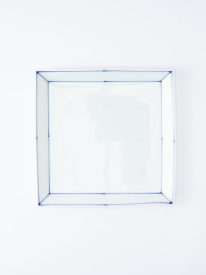
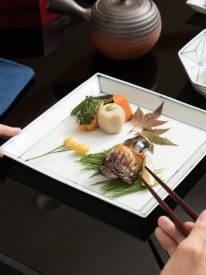
This square plate is perfectly suited for serving main dishes. The lines drawn along the rim accentuate the dish elegantly. Employing a technique of “Sometsuke” (underglaze cobalt blue) painting on a base brilliantly fired to a pure white, each piece is meticulously crafted, embodying the essence of Seto Sometsuke ware. Since the painting is done…
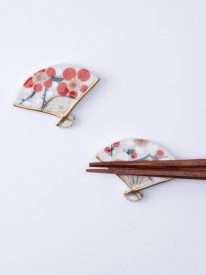
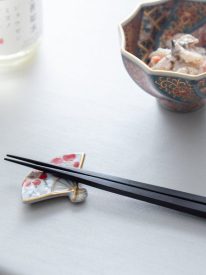
Bring sophistication to your dining setup with these fan-shaped chopstick rests. Crafted in the classic Kyo ware style, the pattern of red and white plum blossoms is given a hand-painted finish that has been elevated by a luxurious golden sheen. Make every meal special with this stylish addition to your table! With its smooth surface, ceramic…
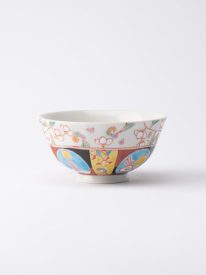
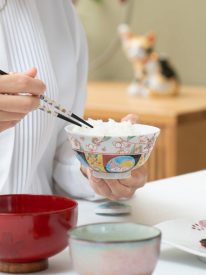
This rice bowl features a pattern designed with a moonlight night motif delicately painted by artisans of Ginshu Kiln, which is especially known as its romantic and playful pastel colored painting. If you take a closer look, there are rabbits hiding in the clouds. The painted areas have a slightly raised texture, a characteristic of Kutani…
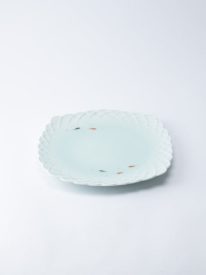
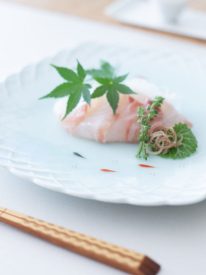
Enjoy the refined natural blue-green luster of celadon with this stylish square plate from Kosen Kiln. The weave-patterned rims add to the clear and cool motif of this decorative celadon plate. With its translucent glaze on the blue-jade hue of celadon, a tranquil atmosphere emanates from the plate’s glossy surface. Adorning the surface of the plate are Medaka…
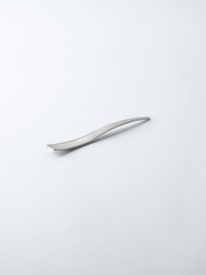
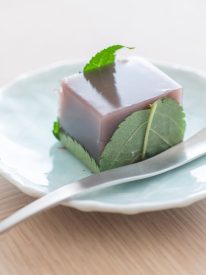
Introducing the tea spoon from the “URBAN” series, which harmonizes effortlessly with any type of dishware. It is produced in Tsubame-Sanjo, a region that accounts for 90% of metal utensil production in Japan. Unlike the design of a typical tea spoon, the entire spoon is shaped with a supple curve that resembles the flow of…
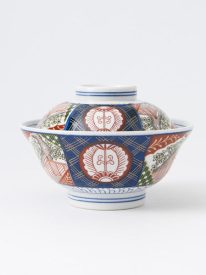
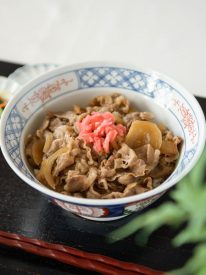
This regular-sized Japanese donburi rice bowl features sakura, or cherry blossoms, framed by dark blue, lattice-like patterns, all rendered in the traditional nishiki-e style. Nishiki-e, meaning “brocade picture,” is a multi-colored woodblock print technique that revolutionized ukiyo-e during the Edo period (1603-1868 CE), when most prints were in black and white. The lid helps keep the…

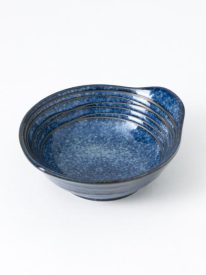 Sea of Clouds Tonsui Bowl